Senin, 06 Juni 2011

Foxed Paper and the Slight Smell of Mold: Reading, Browsing Actual Print Periodicals

Randall Stephens

Last week I visited the Midwestern Baptist Theological Seminary Library in Gladstone, Mo, just north of Kansas City. The staff was terrific and a bonus was an enormous collection of discarded books for sale--$1 or 50 cents/ea. I picked up Tim LaHaye's Battle for the Mind, and, oddly enough, a copy of Gordon Wood's Empire of Liberty.

Ideally, I hoped to browse through some denominational magazines and periodicals from the 1950s and 1960s for my next project on Christianity and rock/anti-rock. I was pleasantly surprised. The library had loads of Baptist and SBC serials dating back to the early years of the Cold War. Some of the titles I browsed through: Baptist Quarterly Review; Home Life; Baptist Training Union Magazine; The Student (A Baptist-style Jesus People-ish magazine, which Sam Hill actually wrote in). In addition to all that there were extensive runs of Christianity Today and Christian Century, along with quite a few other gems.

The Southern Baptist Periodical Index was a real help. But blast the indexers for not cataloging what I wish they had! (Page after page after page on "Missions.") I have seldom used the Index to Religious Periodical Literature (Chicago : American Theological Library Association.) But it's a tremendous resource for work on post-war American religion. And it gives a pretty good indication of the more popular magazines and journals that circulated at the time. See below the first page of the edition for 1971, listing a range of publications. (Click to enlarge.)


So, here are a few questions for all the RiAH research nerds and archive troglodytes out there: What do you suppose were the largest circulating and/or most influential denominational periodicals of the 1950s and 1960s? Which ones are the best for getting a sense of what men, women, and children in the pews were thinking? Why?
Minggu, 05 Juni 2011

Rejoice and Shout: A Journey through Gospel Music History

Paul Harvey

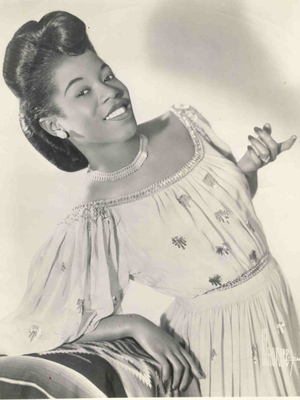
The new documentary Rejoice and Shout premieres this week. It’s a documentary featuring black gospel performances over a full century, from the Dinwiddie Colored Quartet in 1902 to some contemporary stars. The film has gotten a lot of nice write-ups; the link takes you to the film's website, where you can learn more about it. Here in flyover land probably will have to wait until it moves from the “save” to the “queue” part of my Netflix list. A little bit from the NPR segment on the documentary:

Director Don McGlynn, a veteran of the music documentary genre, wanted to trace gospel from its earliest roots to its current incarnation in the music world. The film even plays the first known recording of gospel music, a record made in 1902 by the Dinwiddie Colored Quartet.

The New York Times published a substantial review of the film here; a little excerpt:

This historical survey of the genre draws heavily on the extensive archives of its producer, Joe Lauro, and is grounded in the work of two experts: Anthony Heilbut, who wrote the classic book “The Gospel Sound: Good News and Bad Times,” and Bil Carpenter, whose “Uncloudy Days: The Gospel Music Encyclopedia” chronicles the lives and careers of more than 650 gospel figures. Their analyses are supplemented by the observations of Jacquie Gales Webb, the host of a popular radio program. Mr. Heilbut’s approach is primarily scholarly and historical, and Mr. Carpenter’s is more sociological and political. Smokey Robinson, who introduces the film and offers its closing observations, sets its praiseworthy tone

If anyone wants to read the whole review but is shout out by the Times firewall, let me know and I’ll send to you.

I will be interested to see how it compares to my recent favorite in the genre of gospel documentaries, How Sweet It Was: The Sights and Sounds of Gospel’s Golden Age. This one comes as a documentary and a CD, and it features some astounding older clips; the DVD is basically a strung-together version of those full clips, so not really a “documentary” but more of a compilation. Anyway, I’m looking forward to Rejoice and Shout; if anyone reading this living around a real city gets a chance to watch it, feel free to post your thoughts here.

While you're waiting to see Rejoice and Shout, here's a great clip on Youtube that can be seen in its entirety on How Sweet it Was, for your enjoyment: The Meditation Singers doing "Sanctified Lord."

The Beautiful Mind and Life of Jen Lindell

by Edward J. Blum

You’ve never heard of her, but you would have. She had earned a doctoral fellowship to the Religious Studies department at the University of Pennsylvania and in the fall would have begun her apprenticeship under Anthea Butler and Sarah Barringer Gordon. She had just finished a Master’s Thesis on Mormon-Indian interactions beginning with the initial publication of the Book of Mormon in 1830 and ending with the Mountain Meadow Massacre of 1857. She was my star student who taught me so much about race and religion, helped with my own projects even amid her own routine trips to the hospital, and died far too earlier

.Jen Lindell wrote a Master’s Thesis that easily could have been expanded into an award-winning dissertation. Her broad interest was in the dynamic ways religion influenced the lives of everyday people and on how religious ideas influenced racial perceptions and vise-versa. She fixated on early Mormons and their conceptions of and interactions with Native Americans. She wanted to understand how white people who weren’t considered white by others (in large part because of their distinct faith) at first reached out to non-white people (Native Americans) as potential brothers and sisters, but then years later treated those people with disdain and violence. Lindell refused to take a “top down” approach – which would focus principally on Joseph Smith and Bringham Young – and instead looked to the laity. Reading deeply and widely through diaries, letters, memoirs, and local newspapers, she found epic encounters and love and betrayal, missions and murder, friendship and violence.

Soon, Lindell’s thesis will be deposited in the San Diego State University library and will be available online. I hope scholars interested in Mormonism and race will check it out. She’s got some rich material and fascinating insights. Even more, anyone who reads it will get to know in a small way the brilliant mind that I had the pleasure of learning from for a season. We miss you, Jen, and we’re so glad we got to be a part of your beautiful life.

Related Posts Plugin for WordPress, Blogger...