Tampilkan postingan dengan label reviews. Tampilkan semua postingan

Kamis, 29 Desember 2011

Literature and Secularization: At MLA and in Print


by Everett Hamner

For any of you blog readers who might be at MLA (program is linked here) rather than AHA in a few days(gasp!), there's a session you won't want to miss. Several of the mostprovocative, insightful scholars at the intersection of religion and literaturewill be participating on a panel entitled "Literature andSecularization" (Friday, 3:30-4:45, WSCC 617). Facilitated by SusannahBrietz Monta (Notre Dame, and editor of Religionand Literature), this roundtable will feature Lori Branch (Iowa, author of Rituals of Spontaneity); John Cox (HopeCollege, Seeming Knowledge: Shakespeareand Skeptical Faith); Tracy Fessenden (Arizona State, Culture and Redemption); William Franke (Vanderbilt, Poetry and Apocalypse); Colin Lovell Jager(Rutgers, New Brunswick, The Book of God);and Michael W. Kaufmann (Temple, coordinator of recent Religion and Literature forum, "Locating thePostsecular").

While I'm in advertising mode, many of you--religious studies and history typesincluded--might well enjoy Amy Hungerford's PostmodernBelief: American Literature and Religion Since 1960 (Princeton, 2010). Ireviewed this for Religion and Literaturerecently (43.1, Spring 2011), and here's the opening paragraph:

Atfirst glance, Amy Hungerford’s second book might seem literary criticism’sanswer to Robert Wuthnow’s After Heaven:Spirituality in America Since the 1950s, which shows how Americans havedrifted away from institutional religious commitments and toward more informal,syncretistic spiritualities. However, Hungerford reveals not just a looseningand recombination of doctrines and practices, but the return of a “belief inmeaninglessness” (xiii) rooted in transcendentalism and Romanticism. Postmodern Belief is an examination offaith without content, trust in the nonsemantic, belief as itself a form ofritual, all as discerned primarily through the work of writers rarelyidentified as religious themselves, but who still “live in oblique relation tothe structures and discourses of institutional religion” (xvi). Rather thanconcerning herself with these authors’ theologies, Hungerford investigatestheir convictions about literature. In fact, “their literary beliefs areultimately best understood as a species of religious thought, and theirliterary practice as a species of religious practice” (xvi).

Selasa, 20 Desember 2011

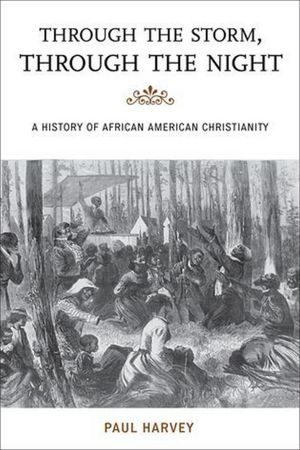
Choice Reviews Through the Storm, Through the Night


Paul Harvey

Pardon the self-promotion interruption, but you're used to it. Now and then I post reviews from the helpful library periodical Choice of books of interest in our field. Today I'm going to seize the blog to post this review of my new book Through the Storm, Through the Night, especially for those of you contemplating your book choices for next semester's classes. 

Harvey, Paul.  Through the storm, through the night: a history of African American Christianity.  Rowman & Littlefield, 2011.  217p bibl index afp; ISBN 9780742564732, $35.00; ISBN 9780742564756 e-book, $34.99. Reviewed in 2012jan CHOICE.

Books abound on the African American religious experience in the US, but Harvey's work is a welcome addition and succinct summary of its 400-year history. Typically in such short monographs, detail is sacrificed for brevity, but Harvey (history, Univ. of Colorado, Colorado Springs) packs great substance through insightful biographies and aptly summarized historical events. He argues against any uniform African American church or religious experience, as African Americans experienced varied contacts with Christianity and often mixed traditional African spiritualism and animistic beliefs. Unquestionably, religious beliefs infused the African American community with hope as they struggled through slavery, Jim Crow legislation, segregation, race-oriented violence, and the civil rights movement. Harvey concludes that though the church is still relevant and Christian denominations are still predominant in the African American community, 21st-century immigrants continue to challenge this narrative, as the Orisha traditions of West and Central Africans, Cuban SanterĂ­a, Haitian Catholicism and Voodoo, Ethiopian Eastern Orthodoxy, and Islamic influences further heighten diversity. The author notes that clannish and local community traditions among these immigrants overshadow any presumed unity based on skin color. In summary, Harvey creates a broad panoramic of the African American religious experience and challenges future scholars to increase scholarly attention to this field. Summing Up: Highly recommended. All levels/libraries. -- M. S. Hill, Gordon College

Rabu, 09 November 2011

Reviewing the Anointed

by Matt Sutton

Part I: Anointing the Anointed

Randall Stephens and Karl Giberson’s book The Anointed has officially been out for two weeks. As reviews begin to appear, it is clear that this is one of the most important—and controversial—books on religion in modern America to appear in some time.

Booklist summarized, “[Stephens and Giberson] rise triumphantly to the challenge of explaining the leaders and the culture of the religious Right without rancor or condescension.”

The ever present Kevin Schultz wrote a smart review for the Wilson Quarterly concluding, “One of the principal virtues of The Anointed is that it represents an effort to demonstrate that the evangelical community is not a monolith of the unthinking.” He did, however, include a caveat. “Yet if that were as true as the authors hope, they probably would have felt less pressed to write this book.”

The Weekly Standard also wrestled with Stephens and Giberson’s arguments. But rather than praise their work, the review admitted half-heartedly that the authors were “not wrong.” I guess that’s as far as the Standard can go in praising a book that does not line up with the magazine’s politics. Nevertheless, “not wrong” is certainly better than being “not right.”

On the Huffington Post, Mark Pinsky used The Anointed to discuss the relationship between evangelical Zionism and the 2012 campaign.

Finally, my review of the book is in the current Christian Century. I conclude,

“The Anointed is one of the best and most important books on religion published this year. It is a well-written, well-argued study that penetrates to the heart of modern evangelical culture. Stephens and Giberson have done an excellent job of critiquing what Mark Noll previously called the ‘scandal of the evangelical mind’ (the scandal is that there is no evangelical mind) while also empathetically explaining why so many evangelicals are smitten by dubious experts. This book deserves a wide reading, which it is certain to have. Evangelicals who take the intellect seriously as well as outsiders struggling to understand the evangelical subculture will benefit from the hard work and keen insights of Stephens and Giberson.”

Part II: Annoyed by the Anointed

But it is not all butterflies and sunshine for Giberson and Stephens. They have managed to offend a few of the most influential (or at least a couple of the loudest) voices in evangelicalism.

First, as Randall has explained, Ken Ham has been complaining about this book, inferring that the authors might be wolves in sheep’s clothing. In fact, the title of one of his blog post was the none-too-subtle “Beware of Wolves.”

Then Al Mohler jumped in. In a blog with the equally none-too-subtle title “Total Capitulation: The Evangelical Surrender of Truth,” Mohler too questions the faith of the authors—not the argument of the book, but the faith of the authors. He writes, “Giberson and Stephens are far outside of the evangelical mainstream, and they know it.”

Apparently he gets to decide what is and is not the evangelical mainstream (which also means that Eastern Nazarene’s administration and tenure committees are not as capable of determining what counts as an evangelical as is this Southern Baptist).

The response of Mohler and Ham is predictable. They are afraid to let their audiences think for themselves. They simply want to teach them what to think. So when a book comes along that challenges what they teach and believe, they react by questioning the faith of its authors. Rather than trusting that their followers are smart enough to analyze critically a book like The Anointed, they choose instead to scare their disciples into not reading at all. It’s easier that way. If their followers don’t read, they won’t ask questions.

In 1940 fundamentalist leader and Moody Bible Institute president Will Houghton lamented to Wheaton College president J. Oliver Buswell, “it takes very little to start a fight with some fundamentalists.” Because fundamentalism by that time had developed such negative and combative characteristics, men like Houghton and Buswell began calling themselves evangelicals.

Seventy years later, the evangelicalism of Ham and Mohler suffers from the same problem as old time fundamentalism. Rather than celebrate the fact that two Christian professors from a Nazarene school have published a wonderful—although not perfect—book with one of the most prestigious academic presses in the world, they insinuate that the authors’ faith is suspect. I guess we shouldn’t be surprised. Houghton certainly would not be. Fundamentalism is still alive and well as Stephens and Giberson so carefully document.

Jumat, 23 September 2011

Virtual Orientialism: Asian Religions Without the Asians

Paul Harvey

A couple of posts coming up here (falling behind already this semester -- the world rushes on, committee meetings must be attended, papers graded, and our poor little blog gets left ignored in the corner) about new books of interest just reviewed in Choice. I've tried to pick out selections here from works which cover subjects that are receive less attention than one would want both here at the blog and in American religious history more generally (our blog contributor Mike Altman is working on Hinduism in America and knows a lot more about this subject generally than any of the rest of us here, so Mike weigh in here with thoughts that you have!).

The first comes from an author familiar to many of you, Jane Iwamura, whose new book about Asian religions and American popular culture is out. Having grown up on Kung Fu and still able to quote lines from it, I certainly am familiar with the topic of "cultural stereotyping by the media" mentioned in the review below. For that and many other reasons, I look forward to picking this work up soon.

Aside from the review, here's a great short piece by Prof. Iwamura drawing on the book. And if you would like a more in-depth scholarly discussion of the book, here is Rudy Busto's discussion of the book, from a panel discussion at McCormick Theological Seminary last year. Finally, I would remind you of the great selection of primary sources on Asian American religions with Asians in Tweed and Prothero's Asian Religions in America: A Documentary History, still an indispensable primary source compilation.

Iwamura, Jane Naomi. Virtual orientalism: Asian religions and American popular culture. Oxford, 2011. 214p bibl index afp; ISBN 9780199738601, $99.00; ISBN9780199738618 pbk, $24.95. Reviewed in 2011oct CHOICE.
Deeply indebted to Edward Said's Orientalism (CH, Apr'79), infused with Jean Baudrillard's conceptions of the hyperreal (Simulacra and Simulation, 1994), and written in the style of Judith Snodgrass's Presenting Japanese Buddhism to the West(CH, Jan'04, 41-2767), this volume more fully develops Iwamura's examination of the "Oriental monk" icon and narrative, which first appeared in Religion and Popular Culture in America, edited by Bruce Forbes and Jeffery Mahan (CH, Oct'00, 38-0893). Iwamura undertakes an analysis of photographic and television images appearing in popular media between 1950 and 1975. Through a close reading of representations of three Oriental monks--D. T. Suzuki, the Maharishi Mahesh Yogi, and Kwai Chang Caine (Kung Fu)--Iwamura (Univ. of Southern California) variously unpacks Americans' unfolding perceptions of the East, the dynamics of cultural consumption and appropriation, and the systematic processes of cultural stereotyping by the media. Easily accessible, this work will interest students of American popular culture, media studies, and Asian American religiosity. Summing Up: Highly recommended. Academic libraries supporting upper-level undergraduates and above. -- M. A. Toole, High Point University

And for further information, here's a bit about the work from the book's website:

Saffron-robed monks and long-haired gurus have become familiar characters on the American popular culture scene. Jane Iwamura examines the contemporary fascination with Eastern spirituality and provides a cultural history of the representation of Asian religions in American mass media. Encounters with monks, gurus, bhikkhus, sages, sifus, healers, and masters from a wide variety of ethnic backgrounds and religious traditions provided initial engagements with Asian spiritual traditions. Virtual Orientalism shows the evolution of these interactions, from direct engagements with specific individuals to mediated relations with a conventionalized icon: the Oriental Monk. Visually and psychically compelling, the Oriental Monk becomes for Americans a ''figure of translation''--a convenient symbol for alternative spiritualities and modes of being. Through the figure of the solitary Monk, who generously and purposefully shares his wisdom with the West, Asian religiosity is made manageable-psychologically, socially, and politically--for popular culture consumption. Iwamura's insightful study shows that though popular engagement with Asian religions in the United States has increased, the fact that much of this has taken virtual form makes stereotypical constructions of "the spiritual East" obdurate and especially difficult to challenge.

Senin, 11 Juli 2011

Jimmy Carter and Conservatism

Blake Renfro

J. Brooks Flippen’s Jimmy Carter, The Politics of the Family, and the Rise of the Religious Right (University of Georgia Press, 2011) provides another interpretation of how conservative Christians became a vocal part of the body politic. Flippen contends that Jimmy Carter’s presidency inadvertently laid the foundation for the rise of the Religious Right under Ronald Reagan. The book focuses on Carter’s 1976 coalition between southern white evangelicals and traditional Democrats. Such an alliance might seem impossible in today’s political environment, and at the time it was a weak partnership. Historians familiar with the era will not be surprised by the contentious issues, including abortion, debates over secular education, feminism, and gay rights. Some studies of modern American conservatism have stressed the role of grassroots organizations in developing a sophisticated and politically charged rebuttal of liberalism, but Flippen focuses on a more powerful force-the American presidency. He demonstrates how the president’s language on social issues influenced broader political and cultural attitudes. Ultimately, Carter’s political balancing “set the stage for its [the Religious Right] movers and shakers.” It was, Flippen suggest, “a top-down movement” led by Pat Robertson, Jerry Falwell, and an accompanying cast of familiar characters.

Race is an important issue when examining this dramatic change in American politics, and it seems like a new version is published every week. An emerging group of scholars has broadened the story by addressing gender and economics. State and local histories, including those by Joseph Crespino, Darren Dochuck, and Allen Tullos, use place and region as a metaphor for the nation’s political terrain. Flippen’s appraisal of race is not particularly new. Similar to Billy Graham’s efforts to sooth racial animosity, Carter catered to southern white Democrats with Biblical language and a call to cleanse one’s heart of hatred. But, Flippen subtly traces how evolving language about race eventually led to the Reagan Revolution’s “post racial” tropes. We can only expect more dissertations will continue to dissect the topic.

Flippin is particularly helpful in understanding the battle over gay rights. Historians of conservatism have paid little attention to the conversation between gay rights activists and conservative evangelicals. Prior to the 1969 Stonewall Riots, gay activism was almost unheard of in American politics, but Flippen illustrates how it emerged as a national issue during Carter’s bid for the presidency. For the time Carter was surprisingly progressive on the issue. Though he did not support the so-called “homosexual lifestyle,” Carter clearly abhorred the kind of rhetoric voiced by Jerry Falwell and Anita Bryant. When he denounced the Briggs Initiative, which proposed to ban homosexual teachers from California’s public schools, evangelical leaders called him a traitor. The administration was not pioneering on gay rights, but Flippen has done more than any other scholar to illuminate the origins of this ongoing culture war.

Jimmy Carter, The Politics of Family, and the Rise of the Religious Right reminds us how powerful the American Presidency has shaped our political and cultural conversation. As we enter another round of political campaigns, historians will undoubtedly find more ways to demonstrate how the past informs our contemporary political temper.

Sabtu, 04 Juni 2011

Faith of the Founders (My Review of John Fea in the Christian Century)

Paul Harvey

I was very happy that the Christian Century asked me to review John Fea's Was America Founded as a Christian Nation: A Historical Introduction -- and even more glad they gave me relatively ample space (over 1200 words anyway, better than the average review) to develop some thoughts on John's book. The review is here. Here is an excerpt, and then continue at the jump:

Faith of the founders

Was America founded as a Christian nation? No, is John Fea's answer to the question posed in his title. But the answer is yes if we consider how Americans (especially from 1789 to 1865) understood themselves as a Christian nation. And then again, maybe it's just a bad question, Fea concludes, because it arises not from a rich understanding of the past but from present-day polemics. Only when we remove it from that context can we begin to make sense of it.

Continue <<<

Sabtu, 28 Mei 2011

Jesus and Jefferson: Mark Noll Reviews Dochuk and Williams in The New Republic

Paul Harvey

Here's a discussion of interest to many: Mark Noll reviews Daniel Williams, God's Own Party, and Darren Dochuk, From Bible Belt to Sunbelt, in the most recent New Republic -- a teaser is online, but you'll have to get the magazine for the rest (or, email me and I'll send to you). Here's a small excerpt:

Recent studies have begun to do better, with two of the best being these books by Daniel K. Williams and Darren Dochuk. Williams, who works from the top down in attempting a broad national perspective, does as well as any writer to date in answering the basic questions of what went into making up the religious right and specifying when the movement coalesced. Dochuk, who works from below in a superbly researched study of grassroots political mobilization, goes far to answer the question of where it came from. The solid history in these volumes should be applauded by all as a welcome alternative to the frenzy of earlier efforts. Yet neither Williams nor Dochuk addresses directly what should be one of the most compelling questions about the political history they describe so well: what exactly is Christian about the Christian right

You will remember we have posted extensively about these important new works, and have put up interviews with Williams here and Dochuk here. Noll adds to the discussion with an interesting conclusion reflecting on historians' own moral evaluations. Noll writes: "neither of these writers carries out the moral evaluation, that, especially, in tandem, their volumes make possible," and then a bit further down,

The merger of Jesus and Jefferson that propelled the New Christian Right was neither made in heaven, as in the eyes of its proponents, nor was it a cynical exercise in hypocritical self-interest, as often portrayed by its opponents. It was rather a historically constructed contingency that, judged from a broad Christian perspective, deserves to be both applauded and denounced."

And he concludes:

Theirs [evangelicals'] is not the tradition of Rerum Novarum, Quadragesimo Anno, or Mater et Magistra. It is instead the tradition of Charles G. Finney, who in the 1830s declared that the problem of slavery could be resolved “in three years’ time” if only slaveholders would recognize that slaveholding was a sin. It is the lineage of Billy Sunday, who in 1919 predicted that Prohibition would empty American prisons and transform the country into a heaven on earth.

The flourishing of conservative evangelical politics in recent American history has done considerable good through the exercise of instinct, anger, energy, and zeal. It would have done much more good, and also drawn nearer to the Christianity by which it is named, if it had manifested comparable wisdom, honesty, self-criticism, and discernment.

Selasa, 24 Mei 2011

Heaven is a place...

Michael J. Altman

So, with rapture week and its pet preparations behind us, what's next? It seems to me that we were all so worked up about the end that we forgot about what comes after the end: Heaven. In his new book Heaven in the American Imagination Gary Scott Smith outlines (mostly Protestant) American ideas about heaven from the Puritans to Michael Jackson's memorial. In the process, Smith effectively gives a narrative account of American Christian history by following heaven. By tracing the changing images of heaven in American minds, Smith narrates changes in American Christianity and culture.

Two questions about heaven recur again and again as Smith moves through American history and become the themes that tie the book together.

How do we get in?
Americans have had two major responses to this question. First, some have said that good people or people who do good things will make it to the place where "the streets have no name."  For others, only acceptance of Jesus Christ as Lord and Savior will grant one entry through the pearly gates. While it is easy to cast liberal Christians or non-Christians on the good works side and evangelicals or conservatives on the other, Smith's account offers a bit more nuanced view. He notes that the Cotton and Increase Mather, Jonathan Edwards, George Whitfield, and Charles Finney all lamented the number of Christians who thought they could rely on their good works for heavenly admittance in the life to come. The split, then, was not between liberals and conservatives or Arminians and Calvinists, but rather, it was between the pulpit and the pew. American preachers from Edwards to Billy Graham kept preaching salvation by faith in Jesus was the only airline to heaven because Americans consistently believed they could reach heaven by being good.

Scott also presents other beliefs about qualifications for celestial citizenship that didn't require Jesus. For example, many slaves believed that their suffering in this world was enough for admittance to heaven in the next. Also, during the Civil War both sides proclaimed that death in battle would send one to heaven. In the 20th century, according to Smith, the "be good" theory of heaven triumphed in American popular culture and, at the same time, the idea of hell lost most of its influence. Perhaps that's why everyone was so excited and self-assured in the past week--we all thought we were good enough to get into heaven and no one really considered the other option.

What's it like up there?
Through the first three chapters of Smith's chronological narrative heaven remains fairly stable. With some variations of emphasis, clergy and theologians from the Puritans through the early national period all thought of heaven theocentrically. That is, heaven centered around the Triune God. The saints would worship the father, enjoy communion with Jesus, and experience the joy of the Holy Spirit. Jonathan Edwards emphasized God's heavenly love while Charles Finney focused on heavenly rewards, but until the Victorian era American clergy agreed that heaven was about humans being with God.

American Christians had always looked forward to meeting biblical heroes like Abraham and the Apostle Paul in heaven, but they soon began to look forward to meeting each other. As the American home became more important through the emergence of the cult of domesticity and the cult of True Womanhood, heaven became less about eternity spent with God and more about eternity spent with loved ones. Heaven became the perfect peaceful and loving Victorian home where all the family would be together again and the home became a place where one could experience heavenly love in this world. As American's lost sons, brothers, and husbands in the Civil War this notion of heaven gained in power.

As Americans became busier their ideas of heaven shifted again. A place of eternal dwelling with the presence of God seemed boring. It seemed like a place where nothing ever happens. Smith narrates how the rise of industrialization, the reforming furry of the Progressive age, and the fast pace of the 20th century prompted Americans to imagine heaven as place of activity.  For Christians in the Gilded Age heaven was a place of joyful work. For Progressives it was a place of service and ministry. By the twentieth century various groups imagined heaven as a place of worship, work, growth, or play. And by the twenty first century it was "the ultimate playground" of celestial bliss. Americans continually remade heaven in the image of the desires of their earthly lives.

Smith does an admirable job of covering a lot of ground in the book--as the breadth of material shows. However, his narrative of American understandings of heaven is embedded within a larger narrative of American religious history that is a bit too Puritan. We start with the Mathers and proceed through the usual cast of white male clergy (Edwards, Whitefield, Finney...). Indeed, mainstream Protestant clergy and theologians are the central subjects of the book. There's little mention of laity or of outsider groups like the Shakers or even the Ghost Dance (which would add much to the discussion of heaven as a place of family reunion.) Furthermore, there is an underlying back-and-forth between "liberals" and "conservatives" in the narrative where the liberals are most often "assaulting" orthodoxy. Nevertheless, the book provides a remarkable example of how one can tell a history of religion in America by picking one theme and tracing it out over the centuries. The shifts from theocentric, to domestic, to workaholic heavens reveals larger shifts in American culture and values. Also, the moments where Smith is able to bring in views of heaven that depart from the mainstream, such as the New Age or his analysis of Michael Jackson's memorial service, are fascinating and provocative. It is an accessible book that would be worth experimenting with in the classroom, perhaps as a parallel reading (or even a replacement) for the usual survey text in the "Religion in America" survey course.

Senin, 23 Mei 2011

Women, Vatican II, and the Remaking of American Catholicism


I'm very happy today to post this guest contribution from Julie Ingersoll, well known for her contributions to Religion Dispatches, where lately she's been following the doings of Christian Reconstructionists and Tea Party Patriots (and the connection between the two). Julie is the author of Evangelical Christian Women: War Stories in the Gender Battles, and is currently writing a book on Christian Reconstructionism.

But today's post is about something very different. Below, Julie gives some thoughts on Colleen McDannell's new book The Spirit of Vatican II: A History of Catholic Reform in America. Colleen will be well known to many blog readers here for previous works such as Material Christianity: Religion and Popular Culture in America, and Picturing Faith: Photography and the Great Depression. Colleen's new book is both an academic as well as a very personal reflection on the role of Vatican II in the lives of American Catholics. Also, for some other reflections on the book (and interviews with the author), see here, here, and (from the Salt Lake Tribune paper) here. A bit down the road on the blog, our contributor Kathleen Sprows Cummings will give us her thoughts on the book as well, but for now, thanks to Julie for these reflections.
_______________________________________________________

Women, Vatican II and the remaking of American Catholicism
by Julie Ingersoll

“Where are the people?”

That’s the question historian Colleen McDannell always asks. In her new book, The Spirit of Vatican II: A History of Catholic Reform in America, (Basic Books, 2011) she gives us a distinctly new view of those reforms to America’s largest denomination. Part institutional history, part social history, part family memoir—and in places strikingly funny-- McDannell’s story has a very special person at its center: her mom, Margaret.

Instead of a traditional “church history” that explores the history of doctrine and the conflicts and negotiations among church leaders --all of them male—McDannell traces the impact of Vatican II on the people in the pews. This shift in focus gives us a glimpse into the religious lives of laypeople, especially women.

McDannell begins with the daily life of Catholics under Vatican I with Margaret’s immigrant grandmother who came to the U.S. in the late 1800s. Margaret herself grew up during the rise of the parochial school system intended to keep Catholic children separated from Protestantism. The practice of Catholicism was formal and stiff; ordained men were in charge and laypeople rarely questioned them. The Mass was said on behalf of the people, in Latin, by a priest with his back to the congregation.

Women’s roles were so limited they were even prohibited from participation in the choir that sang during mass. Of course, no women were part of the Vatican Council’s deliberations (toward the end some women were permitted to listen). McDannell writes:

None of the reporters who covered the opening of the Council noted the irony of the crowd of over two thousand men dressed in lace and silk solemnly striding into St. Peter’s on the feast day of the Maternity of the Virgin Mary without being accompanied by a single woman.

Vatican II brought an emphasis on lay leadership; the priest now faces the congregation; the Mass, in the US, is said in English. Women serve as lay leaders and the roles permitted to lay leaders, whether male or female, are greatly expanded. Traditional hymns are now often replaced with contemporary music and church architecture represents these changes materially.

With this shift in authority toward laypeople, Vatican II empowered women and created in them a sense of the significance of their own voices in terms of parish life, religious practice, and even political issues. While remaining conservative, Margaret’s views on issues like the anti war movement and the civil rights movement were tempered by her church life. Catholics came to see themselves, as McDannell describes them, as “deciding people” even on official church positions on issues such as birth control:

“As father Bill was finishing up Mass with a list of announcements, he looked out at his uncomfortable flock. “Well…regarding…and then came a pause and a big smile; “Big Daddy says no!”

Nancy (one of McDannells’ interviewees) never forgot the moment. “The place roared and everyone clapped and laughed,” she reported. Pope John Paul VI had just announced that artificial birth control would remain off limits. “that was the sign of the times,” Nancy observed, that so few at St. Jude’s took the pontiff’s conclusion seriously that day.”

This is a great book on the impact of Vatican II in the daily lives of American Catholics’ as well as changes in the Catholic influence on American culture and politics (there’s so much more than what I can include here).

McDannell also raises important questions about what counts as “religion.” We often privilege the ideas of leaders without even realizing that those make up the religion of only a few. And religious leaders are all too happy for us to consider them the sole authorities on what counts in their traditions. But, in de-centering religion to examine the cultures, practices and material dimensions, McDannell gives a much more complete picture—a picture that includes real life Catholicism.

Selasa, 17 Mei 2011

Judeo-Catholic-Protestant America

Chris Beneke

Kevin Schultz’s Tri-Faith America begins with the story of a priest, a rabbi and two Protestant ministers. It might be the first line of a joke, but it's deadly serious. The four chaplains were aboard the U.S.S. Dorchester when it was sunk by a German torpedo in February 1943. They all went down with the ship, prayerfully, arm-in-arm after having given their life jackets to sailors who lacked them.

The sacrifice of the Four Chaplains represented something of a landmark in the history of American religious comity. These men were "celebrated ... as emblems of the new tri-faith nation." Yet, as Schultz shows, Americans were already prepared to appreciate the larger significance of their heroism because of the ecumenical groundwork that had been laid over the previous decade by the anti-prejudice proselytizing of the National Conference of Christians and Jews (NCCJ), which confronted a revitalized Ku Klux Klan and a swelling, virulent strain of Western antisemitism in the 1920s and 30s.

Schultz's assiduous research demonstrates that the NCCJ wasn'tmerely engaged in a half-ass exercise of holier-than-thou idealism. During WWII alone, the organization sponsored traveling "tolerance trios"--consisting of a rotating roster of priests, rabbis, and Protestant ministers--who visited nearly 800 military installations and addressed 9 million Americans. This was missionary work on a par with the massive evangelizing and Bible distribution efforts undertaken by American Protestants during the Civil War.

In the early postwar period, such everyday features of American culture as films, manners, and educational programming were shaped by the tri-faith model that the NCCJ had so carefully cultivated. Postwar liberalism was in turn infused with the mostly tolerant and religiously derived moral imperative that went by the name of the "Judeo-Christian tradition."

Upon this somewhat narrow foundation, postwar Americans would adopt broader conceptions of tolerance that included a larger range of religious groups. Religious bigotry and discrimination certainly didn't disappear, but they were largely driven from public life by the early 1960s. Though groups such as the NCCJ proved slow to promote civil rights for African Americans, the trope of inclusion that they popularized resonated throughout the 1960s. Meanwhile, before the Judeo-Christian tradition was appropriated by the Religious Right in the 1970s, it was employed by Martin Luther King and other civil rights leaders to discredit racist institutions and policies in the 1950s and 60s.

There were deep, intangible costs accompanying the triumph of the tri-faith ideal, which Schultz details. Among them was the loss of communal identity by Jews, Catholics, and Protestants. Also endangered were some of the vibrant, distinctive traditions within each of these larger faith categories. Prophecy withered as ecumenism bloomed.

Still, Schultz provides us with an unapologetically progressive account. He makes clear how profoundly important religious differences were to early twentieth-century Americans and how tirelessly some worked to transcend, or at least mediate, them. Tri-Faith America gives religious tolerance its due as a crucial component of postwar liberalism. In this, it represents a sharp rebuke to the fashionable idea that American religious freedom and religious tolerance have been little more than subtle exercises in coercion

Senin, 25 April 2011

A Cheerful and Comfortable Study of Colonial Material Religion

Paul Harvey

Since yesterday I mentioned Lauren Winner's essay in the Sunday Times book review, which reflected on Rob Bell and American conceptions of hell (and heaven), seems like a good time to showcase this review of her new book A Cheerful and Comfortable Faith, recently published by Yale -- the review is from Choice.

Winner, Lauren F. A cheerful and comfortable faith: Anglican religious practice in the elite households of eighteenth-century Virginia. Yale, 2010. 272p bibl index afp ISBN 0-300-12469-4, $45.00; ISBN 9780300124699, $45.00. Reviewed in 2011may CHOICE.

This study by Winner (Duke Divinity School) of the domestic religious life of elite families in Colonial Virginia both builds upon and modifies earlier work, including Dell Upton's Holy Things and Profane (1986). As Upton did, Winner focuses primarily on material objects as evidence; however, she deals not with public, male-dominated church buildings but rather with articles found in and around the home: needlework, baptismal bowls, prayer books, articles related to food preparation and consumption, and garments and rings worn in times of mourning. Winner's argues that although their roles were circumscribed, Anglican women nevertheless carved out a sphere in which they subtly contested the authority over religious matters claimed by clergy and male relatives and that their religious life, though not as dramatic as that of their Puritan counterparts, was an authentic appropriation of Anglican tradition in a Colonial setting. Winner's work is thoroughly and imaginatively researched, informed but not overwhelmed by theory, adequately illustrated, and accessibly written. This book is an important contribution to Anglican, elite, Colonial, material, and gendered dimensions of American religious life. Summing Up: Highly recommended. Upper-level undergraduates through researchers/faculty.
-- P. W. Williams, Miami University

Minggu, 13 Maret 2011

A Nation of Outsiders

Paul Harvey

Sometimes I like to take note of books here which don’t fall into the category of American religious history in some formal sense, but which address religious/cultural themes in ways that are fresh and innovative. Today we have such a text, just published with Oxford: Grace Hale’s A Nation of Outsiders: How the White Middle Class Fell in Love with Rebellion in Postwar America. Kaye Hymowitz reviews it here for the Wall Street Journal, and the Washington Post discusses it here.

The author has been at work on this book a long time, and it’s worth the wait (I read a previous rough draft of the book manuscript a couple of years ago and am going off that; I think nothing drastically changed between then and its publication this year). I admit I preferred the original title of this manuscript before it got changed for the book. Originally it was titled Rebel, Rebel: Outsiders in Twentieth Century America. I loved the multiple signifiers of Rebel there. Oh well, it looks like the publishers wanted one of those “how” subtitles that so many books have now.

More important are the wide-ranging connections Grace Hale draws between romanticism, a sense of alienation and outsiderism, and cultural politics through the twentieth century. The “New Left” and the “New Right” (both very old now) both receive extensive attention, as do writers ranging from Norman Mailer and Elizabeth Bishop to Bob Dylan to William F. Buckley. Hale writes compellingly of the central role musical desires for “authenticity” played in shaping 1960s culture. “Romanticism and a sense of social justice were inseparable,” Hale says, and that romanticism came not just from some sense of alienation from conformist 1950s America, but from much older roots in the Romantic period. As Hymowitz writes in the review:

The new rebels looked to the country's outsiders to clarify their own feelings of alienation. In this respect, postwar rebellion had roots in 19-century romanticism. In their "Lyrical Ballads," Wordsworth and Coleridge had tried to locate hidden human truths in the experience of "people on the margins," Ms. Hale argues—children, peddlers, miners, even the insane. Kerouac wrote in the same vein though with less literary art: "The only people for me are the mad ones," announces the hero of "On the Road," "the ones who are mad to live, mad to talk . . . desirous of everything at the same time." Other rebels, including folk singers like Pete Seeger and, soon enough, back-to-the-land hippies, believed that they spied in rural America the rootedness and authenticity that was being devoured by suburbia and mass culture.

Of great relevance for this blog are the last two chapters, one on the Christian right generally (with a broad conceptual map of what constitutes Christian right there, including William F. Buckley, Jerry Falwell, Jesus People, and others from all over the spectrum), and another more specifically on Operation Rescue.

Book description from Oxford:

At mid-century, Americans increasingly fell in love with characters like Holden Caulfield in Catcher in the Rye and Marlon Brando's Johnny in The Wild One , musicians like Elvis Presley and Bob Dylan, and activists like the members of the Student Nonviolent Coordinating Committee. These emotions enabled some middle-class whites to cut free of their own histories and identify with those who, while lacking economic, political, or social privilege, seemed to possess instead vital cultural resources and a depth of feeling not found in "grey flannel" America.

In this wide-ranging and vividly written cultural history, Grace Elizabeth Hale sheds light on why so many white middle-class Americans chose to re-imagine themselves as outsiders in the second half of the twentieth century and explains how this unprecedented shift changed American culture and society. Love for outsiders launched the politics of both the New Left and the New Right. From the mid-sixties through the eighties, it flourished in the hippie counterculture, the back-to-the-land movement, the Jesus People movement, and among fundamentalist and Pentecostal Christians working to position their traditional isolation and separatism as strengths. It changed the very meaning of "authenticity" and "community."

Ultimately, the romance of the outsider provided a creative resolution to an intractable mid-century cultural and political conflict-the struggle between the desire for self-determination and autonomy and the desire for a morally meaningful and authentic life.

Table of Contents:

Introduction: Outsiders and Rebels
Part I: Learning to Love Outsiders
Chapter 1: Lost Children of Plenty: Growing Up as Rebellion
Chapter 2: Rebel Music: Minstrelsy, Rock and Roll, and Beat Writing
Chapter 3: Black as Folk: The Folk Music Revival, the Civil Rights Movement, and Bob Dylan
Chapter 4: Rebels on the Right: Conservatives as Outsiders in Liberal America
Part II: Romance in Action
Chapter 5: The New White Negroes in Action: Students for a Democratic Society, the Economic Research and Action Project, and Freedom Summer
Chapter 6: Too Much Love: Black Power and the Search for Other Outsiders
Chapter 7: The Making of Christian Countercultures: God's Outsiders from the Jesus People to Jerry Falwell and the Moral Majority
Chapter 8: Rescue: Christian Outsiders in Action in the Pro-Life Movement
Conclusion: The Cost of Rebellion

Jumat, 11 Februari 2011

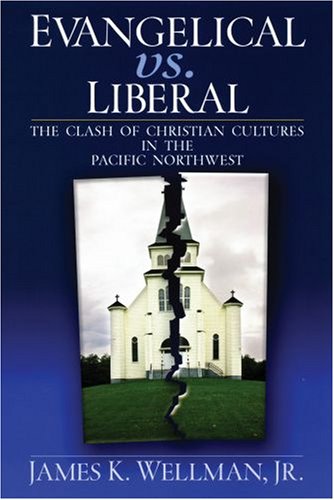
Coffee and Christ: Evangelical V. Liberal in the Pacific Northwest

Paul Harvey

Those of you who know Matt Sutton may think he deserves his own separate listing on the "America Repent" sign in the post below this one. That being said, the man writes fun and outstanding books, articles, and reviews. In the latter category is his piece today "Evangelical V. Liberal: A Report from the Pacific Northwest," reviewing a new book entitled Evangelical vs. Liberal: The Clash of Christian Cultures in the Pacific Northwest. Most reports on the regional variations in American religious expression emphasize the Pacific Northwest as an outlier in terms of relative religious indifference. Evidently, that is changing, at least in certain sectors of the region. And, unlike the evangelicals that I grew up with, these Christian Reformed Church folks don't have any problem with gustatory sybaritic pleasures, including French cuisine and cigar lounges (bringing to mind a conversation with Peggy Bendroth years ago, where she reminisced on growing up with cigar-smoking Dutch Calvinists puffing away all around her).

He concludes:

Evangelical vs. Liberal is a balanced and engaging exploration of religious difference in the most unchurched region of the country. Perhaps the most interesting aspect of this study was Wellman's reflection on how his research had influenced him as a Presbyterian minister and professor of religion. "I began by sharing some of the biases of liberals toward evangelicals," he writes. "But through my research I have come not to agree with evangelicals but to respect the power of their convictions and the perseverance by which they serve one another, their communities, and their world. Evangelicals, in this study, put their feet and their resources where their mouth is." This is not to say that liberals don't. However, evangelicals have a far clearer sense of community and mission. And in Moscow, Idaho, they also serve good coffee and know how to make really tasty French food. For all of these reasons, evangelicals are winning the clash of Christian civilizations, not just across the nation, but even in the Pacific Northwest.

Minggu, 23 Januari 2011

A Wanton Woman

Paul Harvey

We've blogged here before about Leigh Schmidt's new biography of Ida Craddock; yesterday's All Things Considered on NPR features the book, and an interview with Schmidt -- and there's a review of it featured here. Here's a little excerpt from the written material accompanying the story:

Schmidt deals sentences just as lapidary as his subtitle (The Unpredictable Life of Ida C. Craddock, American Mystic, Scholar, Sexologist, Martyr, and Madwoman) leads us to expect. "Since the end of the eighteenth century," he writes, "a good number of freethinkers had seen such fertility symbolism as a rich lode to mine for anticlerical nuggets, but no woman had ever joined this particular fraternity of gentlemanly dilettantes and antiquarians." And later: "The pile of unpublished manuscripts that [Craddock] produced (on everything from lunar mythology to heavenly bridegrooms to animal rites) left little doubt about the extent of her egghead dedication."

You can read an excerpt from the book here, and our previous blogging on the book here. Also, Religion Dispatches has an interview with Schmidt here, in which the author talks about his scholarly "superegoes" that hovered over him as he was writing about this unconventional and somewhat scandalous topic.

Senin, 10 Januari 2011

God-Fearing and Free: Reviews of a Cultural History of the Cold War.

Paul Harvey

A brief note, and a couple of excellent contrasting reviews, of a new book sure to draw a lot of attention: Jason W. Stevens, God-Fearing and Free: A Spiritual History of America's Cold War, just out with Harvard U. Press.

This isn't your father's Cold War book, nor a foreign policy/diplomatic history such as Melvyn Leffler's For the Soul of Mankind. Nor it is one of those "all those crazy duck-and-cover drills, my weren't those funny" books -- not that I dislike those books, and students love them, but that territory has been covered. Rather, this is a searching cultural history of American thought and culture during the Cold War, focusing especially on the liberal elite Cold Warriors who provided much of the discourse from that period.

The link above takes you to a description, table of contents, etc. for the book. Here, I wanted to call your attention to two thoughtful reviews; both praise the achievements of the book, but the first provides some critical reflections and dissent.

Molly Worthen, " 'Counter-Modernism' and Cold War America," extensively reviews the volume, finds much to like, but dissents from portions of what she calls a "learned but highly theoretical intellectual history," one she finds too detached from the real world of policymakers.

By contrast, in The New Republic's online book review section The Book, Michael Kimmage finds God-Fearing and Free a "brilliant and original work of scholarship" in the best tradition of American Studies -- in other words, he likes most precisely what Worthen finds most problematic. The book discusses at considerable length the theme of "innocence," one a staple of American studies scholarship and one revived here to great effect.

I can't wait to dig into this text in more detail; in the interim, these two thoughtful reviews provide much food for thought.

Kamis, 06 Januari 2011

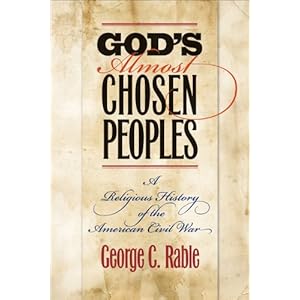
Something More: Secondhand Reflections on George Rable's Religious History of the Civil War

Congratulations to our contributor Ed Blum for the birth of his son Elijah James Blum! What do the birth of his son, some pop music from Secondhand Serenade, and George Rable's religious history of the Civil War have to do with each other? Nothing, you're thinking? Au contraire; read on.

Secondhand Reflections on George Rable’s Religious History of the Civil War
by Edward J. Blum

There’s one and only one book I’m reading closely these days: What to Expect: The First Year. With Elijah James Blum joining our crazy world on December 12, it has been indispensable. Through this bible of all things baby, I’m learning how to feel, how to act, and how to speak a whole new vocabulary: bilirubin; snurgles; meconium are but a few of the words in my new lexicon. For me, fatherhood is a reactive art. My days and nights are mostly encompassed by Elijah acting, Jen responding, and me trying to keep up with the whirlwind.

In addition to an album that transformed the music of the Beatles into soothing lullabies, one other album and one history book have become my regular companions. Between feedings, changings, and tummy time, I’ve found a few minutes to soak in Secondhand Serenade’s Something More and George Rable’s God’s Almost Chosen People: A Religious History of the American Civil War. The two may seem worlds apart, but they’ve come together in my rocking-chair imagination, and I think for good reason.

Secondhand Serenade is named for the nature of their music. Songs first written, sung, and experienced in private are transformed into ballads purchased on i-tunes, thrust too quickly into commercials, and discarded in a matter of weeks. We encounter the music secondhand, distanced from original intent and expression. By far, their best song is “Something More” (also the name of the album). It’s a power ballad to rival the finest of Celine Dion’s, and we only need a “king of the world” cinematic scene for it to become part of our national consciousness. Like most power ballads, “Something More” is about love and pain, desire and disgust. The singer is confused, angry, lost, and ashamed: “I lie awake again, my bodies feeling paralyzed / I can’t remember when / I didn’t live through this disguise.” The singer is “paying for his sins” and thinks that no words can “set him free.” He’s at war with another and within himself. He repeatedly admits and asks: “I’m stuck here in this life I didn’t ask for, / There must be something more, / Do we know what we’re fighting for?” The only answer – the only way to live amid his frustration – is to breathe and to believe: “breathe in, breathe out, / breathe in, breathe out. … There must be something more.”

George Rable’s characters from the 1860s had such similar feelings and asked such similar questions. What were Americans fighting for in the Civil War, and why did they continue to fight for so long? What sins were they paying for? And what was the “something more” that they all seemed to believe in, but couldn’t quite nail down? Like Abraham Lincoln in his Second Inaugural Address, the belief in a shared “something more” failed to stop the fighting, and they couldn’t understand why.

By reading thousands of primary and secondary sources, Rable (far and away one of America’s greatest Civil War scholars living or dead) offers the biggest, most comprehensive religious history of the Civil War ever produced. He tackles the North and the South, men and women, Protestants, Catholics, Mormons, and Jews. He travels with chaplains, tents with privates, and eavesdrops on presidents. More descriptive than argumentative, God’s Almost Chosen People considers so many sources that it is almost impossible to provide one or two central arguments. Yet Rable does. He finds that throughout the war, all sorts of Americans turned to providence to explain what was happening around them. The “something more” they knew they were fighting for was only explainable by looking to the heavens and believing that somehow, someway, God truly had the whole world (or at least the United States or Confederate States) in his hands.

The brilliance of Rable’s book – and what differentiates it in many ways from Harry S. Stout’s Bellah-inspired Upon the Altar of the Nation – is its secondhand nature. Although Rable claims in his introduction that religion could be both “wind and weathervane,” he more often than not renders it as weathervane. Battles happen; women and men die; political documents are signed; legal decisions are rendered; slavery is abolished; and then Americans reflect on the events religiously. They seek God’s providence in response to other events, constantly playing catch up just as I play catch up to Elijah’s needs at home. With this approach, Rable is able to show how widely and diversely religion suffused American society in the 1860s. Whatever the problem, whatever the event, whatever the circumstance, Americans turned to God and God’s providence for answers. By rendering religion secondhand, Rable has shown in epic proportion the omnipresence of the supposedly omnipotent.

And for Rable, the secondhand quality of religion emanates from his approach to religion itself – that it can only be studied secondhand. In this way, Rable wonderfully acknowledges the limits of his study. He (and we) cannot know the firsthand experiences of the women who lost loved ones, the privates who accepted new testaments after losing a hand of cards, or the presidents and generals who anguished (or relished) every death. When he analyzes a diary, a fast sermon, or a newspaper story (all of which Rable read in abundance), he recognizes that he interprets from afar. In this way, Rable demonstrates an incredible respect for his subjects and the gravity of the events.

Yet there are other seconds to consider. When W. E. B. Du Bois turned to seconds, he conjured the idea of “second sight.” He claimed that African Americans could see themselves and their surroundings with a sacred vision that whites could not. And Du Bois thought that the religious expressions of those with second sight could reveal the deepest elements of the soul – the “spiritual strivings” of individuals and communities. When Du Bois turned to the slave spirituals, he found not secondhand expressions, but expressions that revealed the most intimate parts of longing, feeling, and expression. This type of religious history of the war – one that approaches religious creation as a prime mover in historical change – could compel other approaches to the war.

That was not Rable’s project, though, and he shouldn’t be criticized for the book he wrote. God’s Almost Chosen Peoples is outstanding. Scholars of American religious history and the Civil War will have to engage it. And I’m glad that it’s so voluminous that I couldn’t lose it amid the diapers and the onesies.

Senin, 03 Januari 2011

Review: Anetso, the Cherokee Ball Game

Art Remillard

Michael Zogry first learned of the Cherokee precursor to lacrosse, called “anetso,” in a class with Raymond Fogelson of the University of Chicago. The dearth of scholarship on the game surprised Zogry, who saw it as a fascinating blend of athletics and religious ritual. He read carefully the two major treatments of anetso—Fogelson’s 1962 dissertation and James Mooney’s 1890 article “Cherokee Ball Play”—and realized that there was more to the story. So when Zogry began his doctoral work, he aspired to offer a new perspective. This culminated in his innovative, compelling, and thoroughly researched, Anetso, the Cherokee Ball Game: At the Center of Ceremony and Identity.

Zogry spent four years studying anetso before seeing it in person in 1997. He arrived at the fairgrounds in Cherokee, North Carolina armed with a video camera and an intellectual suitcase stuffed with names like Bourdieu, Bell, Grimes, Geertz, LĂ©vi-Strauss, Smith, Turner, and others. Theories raced through Zogry’s head, when suddenly reality struck—literally. As the game progressed, Zogry watched the tiny white ball float toward him and the players following closely behind. Unable to evade the rush, Zogry was knocked to the ground. This collision, the author recalls, “has continued to assert itself as a strong memory. I now think of it as a metaphor for describing my process of grappling with the relevant issues, and frankly, the limitations of my scholarly perspective to apprehend even this bit of culture in anything but a fleeting way” (15).

Specifically, Zogry came to realize that he needed a new vocabulary to discuss this game, which is more than “just a game.” In The Savage Mind, LĂ©vi-Strauss said that a game has a set of rules and ends when one side prevails. In contrast, a ritual, which bears resemblance to a game, aims to produce, in LĂ©vi-Strauss’s words, “a particular type of equilibrium between two sides.” While perhaps a useful point of departure, and certainly still influential, Zogry insists that anetso does not fit neatly within this conceptual framework. It is a game, to be sure. But Zogry demonstrates that anetso connects to the most significant dimensions of Cherokee religious identity. As a result, the game "resists and problematizes" the classifications of LĂ©vi-Strauss and the likeminded (1).

Zogry starts by looking at anetso’s relation to Cherokee cultural narratives. Among the stories he retells is one of a pre-human contest between the birds and animals, where, interestingly enough, two small animals approach the bird team and request to join their side. The team captain, an eagle, accepts the defectors and fits them with wings, making one a bat and the other a flying squirrel. When the game begins, the retrofitted rodents lead the birds to victory. According to Zogry, the Cherokee still recount this narrative, particularly to the youth, to warn against boastfulness and to emphasize the importance of “inclusiveness” and “adaptability” (48). This sense of tribal solidarity was essential during the “Era of Great Change” (1799-1838). Then, missionaries criticized the game for its perceived “heathenish” underpinnings, and calls for removal became louder and louder. Meanwhile, Zogry shows how the Cherokee defiantly played anetso, using it as “a vehicle for expression of Cherokee identity” (105).

In addition to detailing the broad narrative and social meanings of anetso, Zogry also examines rituals directly associated with the game. Preparation begins weeks in advance with public and private rituals. Ball teams hire conjurers, who enlist assistance from “other-than-human persons.” Players avoid sexual contact, while abiding by a strict dietary code that prohibits consumption of young birds, small animals, or frogs. Zogry finds that most of these traditions have carried into contemporary performances of anetso. And while most players are active Christians, few see any conflict between their Cherokee and Christian practices. This is a perspective that has developed with time, just as anetso has changed over the ages. But Zogry insists that the game is still vital, despite claims from informants that it's not. “The ethic of participation,” he retorts, “the way the players carry themselves and acquit themselves on the field, the honor of performing to the best of their ability in a contest that their ancestors once played on the same land, these remain meaningful reasons to participate for Cherokee adults and teenagers” (145).

In the book's closing pages, Zogry considers the broader implications of his findings. For example, he takes aim at Allen Guttmann, who in From Ritual to Record, argues that in the modern sporting world “the attachment to the realm of the transcendent has been severed.” Guttmann maintains that a priest or minister at a football game does not serve the same function as a shaman at an Indian ball game. Without the minister, the football game will go on. Without the shaman, there is no ball game. Zogry is unconvinced. “Football, like anetso, provides a cultural locus for a range of activities, some that can be termed ‘ritual’ and some ‘religious.’ Preliminary and postgame activities, propitiatory activities, community involvement, even gambling serve to weave the experience of this game into the social lives of players and spectators” (221). To be clear, Zogry does not advocate collapsing religion and sports. Rather, he seems comfortable with ambiguity and open to “rethinking the categories in a manner that hopefully is more accurate” (235).

Specialists in Cherokee religion, ritual studies, and religion and sports will appreciate this book. Zorgy uses an impressive array of sources, from his own fieldwork, to newspapers, manuscripts, personal journals, and travel accounts. The book is thoroughly interdisciplinary, drawing insights from historians, anthropologists, and theorists of religion, ritual, sports, and culture. Additionally, Zogry hints at possibilities for more study. He mentions that women presently play anetso, a new development in the game’s history and “a fruitful area of future research” (184). I hope that Zogry explores this "fruitful" terrain, perhaps making it part of a broader treatment of Native American women and sports. I wonder how female performances of anetso would compare with the Navajo and Apache “Sunrise Ceremony.” In this rite-of-passage ceremony, young women arise early in the morning and run out toward the rising sun and back, thereby recreating the myth of the “White Painted Woman,” a deity who reversed the aging process by moving toward the sun and melding with her younger self. The ritualized running also emphasizes strength and health, in contrast to tribal plagues such as alcoholism and type-2 diabetes. Zogry has done the intellectual work to examine this and other religious/athletic performances, and I'm eager to see where he takes us next.

Senin, 27 Desember 2010

Citizens of a Christian Nation, Redux

Paul Harvey

Several months ago Ed Blum posted his thoughts on Derek Chang's Citizens of a Christian Nation: Evangelical Missions and the Problem of Race in the Nineteenth Century (and some other books dealing with religion and war) here. My review of Chang's fine book has just come out in the Journal of American History, and I'm posting it in below.
________________________________________

White northern Baptists in post-Civil War America perceived themselves as “emissaries of the Christian nation.” They carried the gospel of Christ and of American civilization to the freedpeople of the South and to Chinese immigrants in the West. They sought to create a “conduit for the inclusion of alien populations into the brotherhood of Christianity and the nation.” For them, this was part of the new birth of freedom. In doing so, however, they also produced “discourse of difference that made that inclusion yet more difficult.” In seeking to “uplift” African Americans and Chinese, they perpetuated “racial difference through culture and religion” (68-69). The heathen black and the heathen Chinese could be transformed, but they also had to be transformed. In return, the African American and Chinese immigrant subjects turned the language and institutions of uplift and nationalism to their own benefit. Especially by working to establish independent institutions and find leadership roles within them, “their example undermined a significant part of the ideological foundation on which white evangelical uplift was based” (125).

So Derek Chang argues in this engaging study of the work of the American Baptist Home Mission Society in North Carolina (mostly in Raleigh, focused on the building of what became Shaw University) and in Portland among the Chinese community there. Chang gives the evangelicals their due. In the face of Klan violence in the South and anti-Chinese hooliganism in the Northwest, American Baptists worked to develop institutions that would incorporate the freedpeople and the Chinese into a Christian brotherhood.

Ultimately, neither the well-intentioned evangelicals nor their freedom-seeking African American and Chinese subjects fulfilled their dreams and goals as they wished, for “acts of racial terror limited the radical hopes of the home mission project and frustrated the attempts of evangelicals, blacks, and Chinese to fashion an inclusive nation through such interracial enterprises” (157). In the end, while the white Baptists took refuge in a “strain of evangelical nationalism that emphasized orderly hierarchy and stability over redemptive quality and democracy,” African Americans and Chinese “continued to fight for the transformation they desired, using mission resources to “position themselves in the larger battle over their place in the civic order” (158).

Focusing on freedpeople in and around Raleigh, North Carolina and Chinese immigrants in Portland Oregon, Chang’s comparative research and theoretical reflections shed fresh light on the subject of post-war religious reconstruction. Specialists will enjoy the endnotes, where Chang dialogues at length with fellow scholars. More general readers likely will be surprised by the efforts of white elites in Portland to restrain anti-Chinese violence. Despite being “permanent aliens,” for a time the Chinese in the Northwest enjoyed a degree of social inclusion never experienced by African Americans, who theoretically were included in the nation through the postwar constitutional amendments. In the end, both groups suffered at the hands of the virulent racial terrorism of the last two decades of the nineteenth century. Their American century would have to wait.
Related Posts Plugin for WordPress, Blogger...