Tampilkan postingan dengan label baptists. Tampilkan semua postingan

Senin, 06 Juni 2011

Foxed Paper and the Slight Smell of Mold: Reading, Browsing Actual Print Periodicals

Randall Stephens

Last week I visited the Midwestern Baptist Theological Seminary Library in Gladstone, Mo, just north of Kansas City. The staff was terrific and a bonus was an enormous collection of discarded books for sale--$1 or 50 cents/ea. I picked up Tim LaHaye's Battle for the Mind, and, oddly enough, a copy of Gordon Wood's Empire of Liberty.

Ideally, I hoped to browse through some denominational magazines and periodicals from the 1950s and 1960s for my next project on Christianity and rock/anti-rock. I was pleasantly surprised. The library had loads of Baptist and SBC serials dating back to the early years of the Cold War. Some of the titles I browsed through: Baptist Quarterly Review; Home Life; Baptist Training Union Magazine; The Student (A Baptist-style Jesus People-ish magazine, which Sam Hill actually wrote in). In addition to all that there were extensive runs of Christianity Today and Christian Century, along with quite a few other gems.

The Southern Baptist Periodical Index was a real help. But blast the indexers for not cataloging what I wish they had! (Page after page after page on "Missions.") I have seldom used the Index to Religious Periodical Literature (Chicago : American Theological Library Association.) But it's a tremendous resource for work on post-war American religion. And it gives a pretty good indication of the more popular magazines and journals that circulated at the time. See below the first page of the edition for 1971, listing a range of publications. (Click to enlarge.)


So, here are a few questions for all the RiAH research nerds and archive troglodytes out there: What do you suppose were the largest circulating and/or most influential denominational periodicals of the 1950s and 1960s? Which ones are the best for getting a sense of what men, women, and children in the pews were thinking? Why?
Jumat, 07 Januari 2011

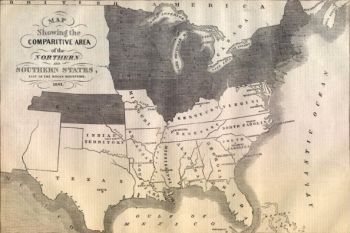
Baptists and the Civil War

Paul Harvey

While we're on the subject of the religious history of the Civil War, here's a new resource of interest. I received an email today from Bruce Gourley, Executive Director of the Baptist History and Heritage Society, on a new site he has constructed on Baptists and the Civil War, featuring an abundance of essays, documents, daily journal entries, and other resources on that subject. He writes:

"Baptists and the American Civil War: In Their Own Words" is a day-by-day journal of the Baptist experience, North and South, during the Civil War. Each day a new journal entry is published, corresponding with that date 150 years earlier.

This digital project began as an outgrowth of research done for my dissertation-turned-upcoming book, Diverging Loyalties: Baptists in Middle Georgia During the Civil War (due in the fall from Mercer University Press).

A quick survey of this website shows it to be a terrific resource for scholars working on all sorts of subjects, as well as those interested in Baptist history of the religious history of the Civil War, in particular. The daily journal features short bits of information and analysis on the events of that day 150 years ago -- this entry from Jan. 2, 1861, for examples, describes the process of voting for secession in Georgia.

Congratulations to Bruce Gourley on making his research and interests available in this wonderfully accessible way, and in incorporating the best scholarship in doing so.

Sabtu, 21 Agustus 2010

The Past is Never Dead . . . Religious Leaders in Virginia on Local Tribes

Randall Stephens

I was just thinking about a new idea for the blog. Maybe a series of posts? "The Past is Never Dead . . ." It could entail news items or books that deal with contemporaries who are wrestling with history. To paraphrase Carl Becker "everyman/woman his/her own religious historian." Many Americans come to grips with the nation's religious identity be resorting to the past. (Isn't this Glenn Beck's big campaign?) Perhaps history has a greater resonance right now. Some questions: How do believers and non-believers use history to describe what America is or has been? Who owns American religious history? Why is it so important for citizens to put religious history, or just American history in general, to use for the present?

Robert Dilday, "Baptist executives urge federal recognition of Virginia tribes," Associated Baptist Press, 19 August 2010.

RICHMOND, Va. (ABP) -- The top executives of two Virginia Baptist groups have joined other religious leaders in calling for federal recognition of six Native American tribes in the state.

In an open letter released Aug. 17, about 30 Christian, Jewish and Muslim leaders asked Virginia’s Republican governor and two Democratic senators to support congressional legislation giving to Virginia’s tribes the same status held by more than 560 other Native American tribes across the United States.

Among the signers were John Upton, executive director of the predominantly white Baptist General Association of Virginia, who also was recently elected president of the Baptist World Alliance, and Cessar Scott, executive minister of the historically black Baptist General Convention of Virginia. . . .

History erased by racist official

Walter Plecker, registrar of Virginia’s Bureau of Vital Statistics from 1912-1946, replaced “Indian” with “black” on every birth and death certificate in his office. Plecker, a white supremacist, said Native Americans had become a “mongrel” mixture. >>>
Related Posts Plugin for WordPress, Blogger...