Tampilkan postingan dengan label Founders. Tampilkan semua postingan

Kamis, 10 November 2011

In the Founding Fathers We Trust?

Kevin Schultz

"In God We Trust" first appeared on U.S. coins during the Civil War in 1864. Nearly a hundred years later, in 1956, an act of Congress made it the national motto. It began appearing on paper currency the following year, in 1957. So it's ascendancy is directly related to two wars, one hot, one cold, but both desperate. Perhaps "There are no atheists in foxholes" didn't have the right ring to it?

"E pluribus unum," on the other hand, was never the official motto, but it did appear on the official seal of the United States, and has since 1782. Interestingly, it's inclusion on the official seal emerged from a recommendation by a committee of Founding Fathers, who had gathered in 1776 no less to craft the symbols of the new nation.

So if we're going by strict constructionism, then, "E pluribus unum" wins the national motto game hands down. But of course our legal body is a flexible thing, changing with the times. So we've got "In God We Trust."

But "E pluribus unum" makes more sense in another historical way too. Most of the Founding Fathers were Christians of some sort or another, and most believed that a religion of future rewards and punishments was a vital part of 18th-century statecraft, but they almost to a man believed that there were more types of religion in the United States than could be described and upheld by a national body. After all, when Ben Franklin asked for a moment of prayer to help ease a particularly thorny debate in the Constitutional Convention, only three or four Founding Fathers thought it was a good idea. Instead, we got the First Amendment.

Perhaps last week's congressional vote to reaffirm the national motto as "In God We Trust" is just another reminder that those trying to prove America's distinct Christian heritage and mission are more interested in winning for souls for Jesus than in understanding the past. Or maybe the War on Christmas really is a real thing. Indeed, there are no atheists in the North Pole.

Jumat, 21 Oktober 2011

History Now Features Colonial American Religion

Paul Harvey

The below is taken from an entry on John Fea's blog, featuring a new issue of History Now that is devoted to religion in colonial America; it should be of interest to many, so I'll repost here.
____________________________________________

"History Now" Explores Religion in Colonial America
The current issue of History Now, the online journal of the Gilder-Lehrman Institute of American History, is featuring articles, lesson plans, and activities related to religion in the colonial world. The articles include:

The Puritans and Dissent: The Cases of Roger Williams and Anne Hutchinson by Francis J. Bremer

Early America’s Jewish Settlers by Eli Faber

The Origins and Legacy of the Pennsylvania Quakers by Barry Levy

Thomas Jefferson and Deism by Peter S. Onuf

The issue also includes a very cool interactive map tracing the concentrations of various religious groups in different parts of the British colonies.

Kamis, 20 Oktober 2011

The Founding Fathers and the Debate Over Religion in Revolutionary America

Paul Harvey

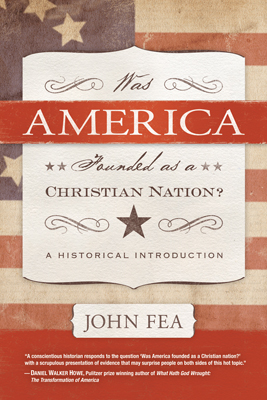
Several times on this blog we've discussed and reviewed John Fea's Was America Founded as a Christian Nation: A Historical Introduction. I'm presently using this in a class, to excellent results, as the students are very engaged with the material (and curious about the author!). Ed Blum's post on using the book in his Historiography course produced a series of blog comments which suggests that he must have had a vigorous class discussion coming out of the work.

Here's a very new primary source volume which should serve many as an eminently usable accompaniment for those wanting to dig into this era further or do a "compare the historian's work to the original sources" kind of exercise: Thomas Kidd and Matthew Harris, eds., The Founding Fathers and the Debate Over Religion in Revolutionary America, just published with Oxford. Click on the link and it will take you to the Amazon page for the book, where you can go through the table of contents and see if the work is right for your class.

Even better might be combining this collection of documents with students searching out those from the kinds of revolutionary Americans discussed by Gary Nash in The Unknown American Revolution or some similar text which incorporates voices reaching beyond "the founders." Ed's students discuss precisely this point in their comments on his post (linked above).

The editors include a number of the old standbys on the subject (Jefferson's Danbury letter, the Treaty of Tripoli, various fast day proclamations, and some of the Founders' musings on the subject) as well as some other material less frequently invoked (some state constitutions, the Northwest Ordinance, and some others). Below is a bit more about the book from its website; it looks like a good bet to be a classroom staple for those who teach in this era, much as is Kidd's volume with Bedford books The Great Awakening: A Brief History with Documents, which I used to excellent results last summer in leading a group of K-12 educators in a Teaching American History program in thinking about how to integrate religion in their American history lesson plans.

Whether America was founded as a Christian nation or as a secular republic is one of the most fiercely debated questions in American history. Historians Matthew Harris and Thomas Kidd offer an authoritative examination of the essential documents needed to understand this debate. The texts included in this volume - writings and speeches from both well-known and obscure early American thinkers - show that religion played a prominent yet fractious role in the era of the American Revolution.

In their personal beliefs, the Founders ranged from profound skeptics like Thomas Paine to traditional Christians like Patrick Henry. Nevertheless, most of the Founding Fathers rallied around certain crucial religious principles, including the idea that people were "created" equal, the belief that religious freedom required the disestablishment of state-backed denominations, the necessity of virtue in a republic, and the role of Providence in guiding the affairs of nations. Harris and Kidd show that through the struggles of war and the framing of the Constitution, Americans sought to reconcile their dedication to religious vitality with their commitment to religious freedom.

Selasa, 27 September 2011

Including "Religious Others" in the Christian Nation "Debate"

by Edward J. Blum

Amid the culture wars of the 1990s, Isaac Kramnick and R. Laurence Moore published a slim volume. It had a provocative title and a silly subtitle: The Godless Constitution: The Case against Religious Correctness. Thankfully, the subtitle was later changed to A Moral Defense of

the Secular State (although, of course, the “a” before “moral” could cause some confusion). Kramnick and Moore argued that the founders of the United States purposefully created a secular nation and that waves of evangelicals throughout the nineteenth and twentieth centuries added religious appendages to the secular framework. This left many Americans confused, frustrated, and bitter. Thank goodness Kramnick and Moore could show us the right (and by right, I mean left) way. Reviewing the first edition, UNC’s John E. Semonche concluded that The Godless Constitution was “not an unworthy entry into a debate that has never verged on the profound.”

Wow. If that doesn’t make you chuckle, then you haven’t read enough reviews that essentially end, “makes a significant contribution to many significant fields.”

“Profound” is such a tricky word. Semonche certainly wasn’t referring to Madison’s and Jefferson’s discussions of church-state relations – so profoundly analyzed in David Sehat’s The Myth of American Religious Freedom. Perhaps Semonche was thinking of Jerry Falwell and Francis Schaeffer, but their acolytes certainly took their works to be profound.

Thanks to John Fea, historians now have a profound tool to use in the debate. I have been teaching Was America Founded as a Christian Nation? in my historiography class, and we’re having a blast. Fea shares at least one commonality with Kramnick and Moore. All write from a shared frustration with the simplistic histories of the nation presented by the religious right. Unlike Kramnick and Moore, however, who wish to defend a secular state, Fea wants to teach about history. He wants students and interested readers to think in terms of change over time, context, causality, contingency, and complexity. And as a teaching device, this book is without doubt profound. There is so much to commend in Was America Founded as a Christian Nation?, especially Fea’s examination of the history of the idea that the United States was a Christian nation.

When I hold The Godless Constitution and Was America Founded as a Christian Nation? side-by-side, I’m left with a few questions. First, where are the women? If “American religious history is women’s history” (or is it women’s history is religious history … I can never remember; thank goodness for google), as Ann Braude so famously put it, how are we still able to write histories like this without women playing prominent roles? Second, do the voices of African Americans or Native Americans or immigrant Americans trouble the discussion? Years ago, I published an essay on African American uses of “Christian nation” rhetoric and others have done similar work, such as Joanna Brooks in American Lazarus or Eddie Glaude in Exodus! Have we abandoned “religious outsiders” in this debate?

Third, and finally, is there any difference in historical and theological opinion among conservative evangelicals and anti-liberal evangelicals? Jason Bivins published an amazing book several years ago on “anti-liberalism” (meaning animosity for the large state and liberal norms, but not necessarily pro-Republican Christians) where he showed how home schoolers and the Berrigan brothers shared a political sensibility of frustration. If we consider the contemporary political terrain as complex and variegated (even among conservatives who are so easily made into caricatures rather than understood on their own terms), then what are the differences of opinion among the anti-liberals and anti-secularists?

My point from these questions would be this: to understand historically the Christian nation debate, we need to expand the parameters of inclusion and more richly think about the political fabric of the nation. Without doing so, we’re left thinking antebellum Whigs dominated American politics (they didn’t!), that Martin Luther King, Jr., was the only one to use Christian nationalism for moral politics (he wasn’t), and that contemporary conservatives are convinced antichrist is among us (many don’t and many think those who do are nuts).

I’m off to the East Coast with a satchel full of new books … so I’ll be back with some reviews from 35,000 feet. You can expect several “unworthy” entries.

Minggu, 18 September 2011

Back to the Future: Christianity and the American Founding

I'm looking forward a bit later this semester to using John Fea's Was America Founded as a Christian Nation in my "Theory and Methods of History" class. Aside from the precise subject matter, Fea has much to teach about thinking historically, on any subject. Below is my review of the book published several months ago at Christian Century, which is freely available online so I'll repost here, particularly for those of you who would be interested in using the book next semester or some other time in the future.

Paul Harvey

Was America founded as a Christian nation? No, is John Fea's answer to the question posed in his title. But the answer is yes if we consider how Americans (especially from 1789 to 1865) understood themselves as a Christian nation. And then again, maybe it's just a bad question, Fea concludes, because it arises not from a rich understanding of the past but from present-day polemics. Only when we remove it from that context can we begin to make sense of it.

As chair of the history department at Messiah College, a professing Christian, author of an outstanding book on an 18th-century figure of the "rural Enlightenment" (Philip Vickers Fithian), a frequent public speaker and a tireless blogger at The Way of Improvement Leads Home, Fea is rapidly making a name for himself as a public intellectual who brings the virtues of scholarly humility, patience and objectivity to highly controversial questions of religion and the founding era of American history. This book is a model of scholarly restraint, of patiently working one's way through the sources and of historicizing the questions and terms with which one works.

America was not "founded as a Christian nation," Fea suggests, because its founding documents were those of a fledgling nation-state and not intended as religious statements. The Declaration of Independence was a document of foreign policy aimed at persuading other nations of our independence, and the Constitution was a secular document of governance aimed at shoring up a national government that had proven far too weak during the era of the Articles of Confederation.

Moreover, present-day proponents of the Christian nation thesis (notably self-styled scholars such as David Barton and writers such as Peter Marshall, author of The Light and the Glory) depend heavily on documents that are taken out of context. Fea points out that while some founding fathers (such as John Jay) held recognizably evangelical Christian beliefs, most of the major founders held a range of beliefs that positioned them as either lukewarm high-church Christians who mainly talked about Providence or rational theists such as Thomas Jefferson, who actively rejected and even ridiculed central Christian doctrines such as the resurrection of Christ.

Then again, yes, America was founded as a Christian nation, Fea argues. For example, nearly every individual state (but not Virginia) enacted a state constitution that made it "very clear that they were Christian societies, placing Protestant qualifications on office holding and allowing government to tax citizens for the purpose of promoting the Christian religion." Moreover, Ameri­cans of the founding era, even including those far outside the bounds of Christian orthodoxy, trusted that "religion was necessary in order to sustain an ordered and virtuous republic."

During the Second Great Awakening in the 19th century, when evangelicalism rose to become a dominant form of religious expression, many Americans assumed a Protestant base to American culture. In the words of historian David Sehat, they created an informal but powerful "moral establishment" that in some ways wielded more power than any national legal establishment of religion would have. The religion clauses of the First Amendment ("Congress shall make no law respecting an establishment of religion, or prohibiting the free exercise thereof") ruled out any legal establishment at the national level. But Americans exercised the free-exercise clause freely, inventing a bewildering array of new denominations, missionary societies, publication boards and religions throughout the 19th century, making America a Christian nation in demography if not in law.

Thomas Jefferson had dreamed of a rationalist republic; what he got instead was a Methodist millennium. In many ways, the idea of America as a Christian nation, as put forward by its current proponents, was an invention not of the founding era but of the 19th century. In other words, the phrase Christian nation as used in Fea's title itself has a history, one that underwent significant changes and transformations between the era of Franklin and the era of Falwell.

But most important, Fea suggests, the question "Was America founded as a Christian nation?" is badly posed. The question is ahistorical because it presupposes a stable set of terms (such as nation, founding and Chris­tian) that in fact are historically contingent and must be understood within the context of their own time and place. Fea's most important original intention is to give readers a lesson in historical thinking—a lesson on the strangeness and distantness of the past in relation to our own preconceptions and concerns.

For example, the famous Treaty of Tripoli in 1797 assured the Muslim states of the Barbary Coast that "the Government of the United States of America is not, in any sense, founded on the Christian religion"; no religious differences between the United States and Tripoli would come between a necessary and important trade agreement protecting American ships from piracy. The treaty stated a historical truth about the Constitution. Americans, however, viewed the contest between the United States and the Barbary nations as a holy war, avidly read captivity narratives describing Christians being forced to convert to Islam and characterized Muslims as "children of Ishmael" who threatened Christian civilization. In short, in spite of the secularism of the founding documents, many Americans from the Revolution to the Civil War did understand themselves to be citizens of a Christian nation.

Of course, those same Americans disagreed vehemently on what constituted a Christian nation, hence the denominational splits, religious vituperation and the bloody Armageddon of the Civil War. And since then Amer­icans have continued their disagreements.

Fea tells this story with consummate skill and evenhandedness. However, his evenhandedness sometimes seems to suggest points of controversy where there aren't any (not unlike the Obama "birther controversy"). In the present day, even advocates of the "godless Constitution" viewpoint (such as historians Isaac Kramnick and R. Laurence Moore) fully understand the deep religious base of American history. They suggest not an exclusion of religion from the public square but simply an avoidance of any special privileges for it. The Christian nationalists, by contrast, have some legitimate points (fully credited by Fea), but they also actively and unapologetically use and distort history in precisely the ways that Fea warns against in his introductory chapter, titled "How to Think His­torically."

The Christian nation debate is not really an intellectual contest between legitimate contending viewpoints; it is instead a manufactured controversy akin to the global warming debate. On one side are purveyors of a rich and complex view of the past (including most historians who have written about the founding era). On the other side is a group of ideological cranks who have created an alternate intellectual universe based on a historical fundamentalism. In their drive to create a usable past, they show little respect for how the past is a "foreign country."

Sabtu, 04 Juni 2011

Faith of the Founders (My Review of John Fea in the Christian Century)

Paul Harvey

I was very happy that the Christian Century asked me to review John Fea's Was America Founded as a Christian Nation: A Historical Introduction -- and even more glad they gave me relatively ample space (over 1200 words anyway, better than the average review) to develop some thoughts on John's book. The review is here. Here is an excerpt, and then continue at the jump:

Faith of the founders

Was America founded as a Christian nation? No, is John Fea's answer to the question posed in his title. But the answer is yes if we consider how Americans (especially from 1789 to 1865) understood themselves as a Christian nation. And then again, maybe it's just a bad question, Fea concludes, because it arises not from a rich understanding of the past but from present-day polemics. Only when we remove it from that context can we begin to make sense of it.

Continue <<<

Kamis, 31 Maret 2011

John Fea on the TV

Randall Stephens

RiAH friend and contributor John Fea was recently featured on C-Span's Book TV. Fea appears on a March 18 panel on The Founding Fathers and Religion. He speaks about his new book Was America Founded As a Christian Nation?: A Historical Introduction (Westminster John Knox, 2011). Check the video out here. (Sorry, can't embed it.) Here's the summary:

Authors talked about their books on the American Revolution and role played by religion in the founding of the United States. They also responded to questions from members of the audience. Tatiana van Riemsdijk moderated. The participating authors were: Barbara Clark Smith, author of The Freedoms We Lost: Consent and Resistance in Revolutionary America; John Fea, author of Was America Founded As a Christian Nation?; and John Ragosta, author of Wellspring of Liberty: How Virginia's Religious Dissenters Helped Win the American Revolution and Secured Religious Liberty. "Founding Fathers and Religion" was a panel at the Virginia Festival of the Book in Charlottesville, Virginia, held in the City Council Chambers on Friday, March 18, 2011.

Minggu, 30 Januari 2011

Was America Founded as a Christian Nation?

Paul Harvey

The question is badly posed, our contributor John Fea points out in his new book, to be available in just a couple of weeks, Was America Founded as a Christian Nation: A Historical Introduction.

Publishers' Weekly has a nice note on the book:

Fea, history professor at Messiah College, does not answer the title query because, he says, “it’s a bad question.” Instead, Fea urges, think like a historian. Turns out, history is not about picking the best fruit off the vine to support your opinion--or the opinions of TV talkers--it’s about doing your homework. He does just that to produce this primer, as he calls it, which defines “history,” “nation,” and “Christian.” Fea studied current position papers of proponents and opponents of the title’s question, and he read from the past: the Federalist papers, John Adams and Jefferson’s writings, state constitutions, debate resolutions. In part one, the author traces the concept of a Christian nation from 1789 to today; part two focuses on the American Revolution, from the British colonies’ points of view to the constitutional “wall of separation between church and state.” Part three, the most fluid and fascinating, profiles specific founders, their orthodoxy vs. their orthopraxy, especially concerning the topic of complex, un-Christian slavery. Fea’s style, clean and simple, persuades by history, not histrionics. (Feb.)

John has some more thoughts on defining the terms of the book here; his speaking schedule on behalf of the book over the next couple of months is here.

This is a book meant for a broad audience, and also (one hopes) will help public rhetoric turn it down a notch by introducing some sense of historical complexity and contingency. Congratulations to John, and we wish his book a most successful launch.

Rabu, 06 Oktober 2010

Glenn Beck, Methodism, and "Black Founders"

by Christopher Jones

Glenn Beck initially drew my interest because of his Mormonism—I sensed in Beck’s conspiratorial approach to politics something reminiscent of an earlier generation of Mormon public figures. The pervading fear of socialist subversion, combined with the particularly Mormon interpretations and understandings of human agency, the methods and aims of satanic opposition, and the divinely-inspired nature of America’s Founding documents, were reminders both that the influence of Cleon Skousen and Ezra Taft Benson’s religio-political views still loomed large among a certain segment of the Mormon population and that in them lay a narrative that had the power to appeal to not only conservative Mormons but other embittered Americans as well, suspicious of the government and intent on rescuing the nation from secularism and immorality (and make no mistake,
perceived secularism and immorality are as central to Beck’s movement as is some vague libertarian notion of fiscal responsibility). These topics have been discussed, analyzed, and reanalyzed at least a hundred times over by now (though some commentators rehash them anew and claim such discoveries for their own, all while butchering the identities of key people and ideas in Mormon history), and to be honest, I’ve grown weary of thinking about Beck, his Mormonism, and his agenda in general. In fact, I’d sworn off posting anything more on Beck here or at the Juvenile Instructor.

But one of Beck’s more recent forays into early American history has forced me to reconsider. It touched a nerve not because of Beck’s subtle invocation of Mormon themes, but rather because they addressed the subject of my current research—early American Methodism. Sandwiched in between Beck’s recent assertion that race relations in America were (with the exception of some unidentified “racists”) fairly harmonious before the years immediately preceding the Civil War and that provisions for Revolutionary War soldiers and veterans operated on a sort of colorblind basis is an intriguing discussion of what Beck oddly refers to as “the first real megachurch … a white and black megachurch.” The "megachurch" in question (which goes unidentified) is St. George's Methodist Episcopal Church in Philadelphia and the central figure is Richard Allen, eventual founder of the AME Church.

“Richard Allen,” Beck explains, “was a preacher at a white church—a megachurch. … And Richard Allen, this megapreacher, he tried to segregate.” Beck’s go-to guy for all matter historical, David Barton, chimes in, noting that “In the 1790s [Allen] proposed having a black denomination. And both whites and blacks said, ‘we don’t want that. We want the integrated stuff. We don’t want separate denominations.’ There was finally an overt act of racism in one church that kind of gave him the impetus to go ahead and start a black denomination. But for years, neither blacks nor whites wanted a separate denomination ‘cause they worshipped together in those churches, in Philadelphia and elsewhere.”

Rather than focusing on each of the several problematic points raised (the insightful scholarship of Albert Raboteau, Dee Andrews, and Richard Newman is recommended for those interested), I’d like to ruminate on the meanings and implications of two particular points.

First, I was struck by Beck and Barton omitting entirely any mention of Methodism. Richard Allen is simply “a black preacher” and St. George’s is simply a generic “megachurch.” Considering that Methodist theology and worship were so central to Allen’s identity as a Christian (and as a black man), and that his "black denomination" remained within Methodist Episcopal tradition, this seems as especially odd omission. This not only simplifies and distorts the history of St. George’s (and Methodism more generally) by ignoring the complex dynamics of early American religion, but also serves as a useful means of locating this supposed bastion of interracial harmony within the tradition so many of Beck’s listeners and viewers claim as there own today—conservative evangelical Christianity. This rhetorical maneuver, then, allows these conservatives to co-opt the legacy of interracial evangelicalism in early America (in much the same way that Beck has co-opted the legacy of Martin Luther King, Jr. and the Civil Rights Movement of the twentieth century).

Second, this conversation between Beck and Barton took place during a recurring segment of Beck’s show called “Founder’s Friday.” This particular episode was devoted to “Black Heroes in American History,” and was part of Beck’s stated effort to “spend more time learning about our black founders, and restoring this part of history” (a worthwhile effort, no doubt—at least theoretically). I was immediately reminded of Richard Newman’s biography of Richard Allen, Freedom’s Prophet, in which Newman sought to place Allen squarely within the tradition of America’s Founding Fathers. Echoing others, Newman reinforced the notion that Allen was a black founder, but moved beyond previous assessment by declaring that Allen was deserving of such a title not only because he founded black institutions but also because he “was essentially the forerunner of modern civil rights activists” and because “his belief in nonviolent but confrontational reform offered lessons for virtually every black leader who followed in his wake” (p. 4). As Alan Taylor summarized in his review of the book, “Allen was a Founder for all Americans. He emphasized a prophetic vision of America as a multi-racial democracy of equal rights and equal opportunity. His egalitarian vision was far more daring than anything considered by the more famous white Founders.”

In Beck’s vision of “black founders,” however, Richard Allen in cast as a foil to the interracial harmony he earlier enjoyed as a “mega-preacher” to “2,000 whites” by promoting “segregation.” Tellingly, then, what Beck sees as antithetical to his imagined ideal of American society, Newman see as admirable and daring. The implication of Beck’s narrative—that this “black preacher” and the black church he pioneered, are mere distractions to the real story of this Christian nation—serves as an interesting contrast to those who “seek a sense of authenticity” in black institutions and raises important questions about the place of the black church in the conservative white mind today.

Surveying Religious Knowledge: The Founding Fathers, and the Pew Poll

Paul Harvey

For anyone interested, an announcement from History News Network:

Join Thomas Kidd, author of
God of Liberty: A Religious History of the American Revolution for a live Q&A on HNN's Ning Network at 3 p.m. Eastern on Wednesday, October 13.

Kidd's take on the poll of Americans' religious knowledge, which Chris Jones blogged about here a few days ago, may be found at "
The Founding Fathers Would be Shocked at Our Religious Ignorance." He makes the point that the relatively high degree of religious knowledge evinced by skeptics, noted by the recent pollsters, is not new.

Over at Immanent Frame, a variety of other scholars offer their views on, and take a number of shots, at, the Pew Poll:
Surveying Religious Knowledge. In her contribution, Kathryn Lofton asks, if a person is polled about rock and roll history and is unable to identify Big Mama Thornton, does this make them ignorant of rock and roll history? She continues:

For now, I can only observe that a survey which pits religious groups against one another in a Quiz Bowl, and which imagines that praying Protestants ought to know the authority of Martin Luther, tell me very little about religious knowledge, and tell me even less about what the humanities do to serve such a surveyed public. It may be that we live in a budgetary time that begs for base descriptions of our basic (un)knowing. I would only warn that the minute we believe the answers we offer begin with multiple choice questions is the same minute when we cede our complexity to that formation of ignorance.
Related Posts Plugin for WordPress, Blogger...