Tampilkan postingan dengan label alternative religions. Tampilkan semua postingan

Kamis, 06 Oktober 2011

Steve Jobs and High-Tech Spirituality

Delighted to host today a guest post by Kip Kosek, author of the just-released-in-paperback Acts of Conscience: Christian Nonviolence and American Democracy. Kip contributes to a thriving conversation about the influence of alternative spirituality on the architects of the iconic products of our age, including those from Apple. For more on this topic and on Steve Jobs and religion, check Elizabeth Drescher's post at Religion Dispatches.

by Kip Kosek

What does Steve Jobs, who died on October 5 at the age of 56, have to do with American religion? Of course, there’s the robust “cult of Mac” that venerates each new Apple product as a sacred gift sent from the divine land of Cupertino. Yet Jobs was more than the architect of an obsessively loyal customer base. He was also part of a creative nexus that brought together the alternative spiritualities of the counterculture and the advanced technologies of the personal computer.

As Fred Turner explains in his illuminating book From Counterculture to Cyberculture, hippies and hackers had a lot in common. The counterculture’s preoccupation with energy fields, aliens, and Eastern religions resonated with the invisible networks and virtual reality imagined by early personal computer developers. The Whole Earth Catalog, an eclectic resource of ideas and products for back-to-the-land types, was an inspiration for the Internet, “sort of like Google in paperback form,” as Jobs later put it. In the mid-1970s, Jobs traveled to India and declared himself a Buddhist. From a certain perspective, Apple’s design principles embody a Buddhist aesthetic of simplicity, even nothingness. The iPod wheel as the Wheel of Life.

Jobs was not the only trendsetter whose search for transcendence dovetailed with his faith in technology. Kevin Kelly, an editor of the Whole Earth Catalog and later a founder of Wired, has produced several provocative speculations about the spiritual consequences of high-tech. A Christian, but an unorthodox one, he believes that artificial intelligence will produce a revolution in religion. His essay “Nerd Theology” suggests that “as we make other minds, these minds will change our mind about God.”

In his spiritual outlook, Kelly is an anomaly, as was Jobs. Relatively few Americans have embraced Buddhism or pondered the theological implications of Watson. Nonetheless, the extraordinary innovations that shape our technological lives are inseparable from the computer pioneers’ participation in the American religious fringe. They thought different. Now we all do.

Kamis, 28 Juli 2011

Mormons, Pagans and ‘Post-Modern Polygamy’

By John L. Crow

One may ask what do Mormons and modern Pagans have in common in today’s religious marketplace? A recent post by a prominent Pagan blogger tells us: multiple-partner marriages. Last Tuesday, Jason Pitzl-Waters, who writes The Wild Hunt blog, posted about a recent Mormon polygamy case in Canada and the impact that they might have on Pagans in Canada and potentially the U.S. While paganism is not known for polygamy, it has a widely known association with polyamory. (As one example, see Raven Kaldera's book, Pagan Polyamory: Becoming a Tribe of Hearts.) For those not familiar with the term, polyamory is defined by Maura I. Strassberg, Associate Professor of Drake University Law
School, as:
a form of commitment which is flexible and responsive to the needs and interests of the individuals involved, rather than a rigid institution imposed in cookie cutter fashion on everyone, this new polygamy reflects postmodern critiques of patriarchy, gender, heterosexuality and genetic parenthood.
Strassberg calls polyamory a kind of ‘post-modern polygamy.’ This is not the only term used. She points to the web site/magazine, Loving More, a polyamory advocacy site, as a place where the numerous polyamory-related terms are defined. Other terms Loving More adds include: Poly-Family, “a group polyamorous people all the people living in or sharing life experiences in the same home or household”; Poly activist, “a person interested in taking action intended to counteract the political, social and religious enforcement of monogamy”; and One True Way Polyamorist, “a person who believes there is only one right way to be polyamorous often based on their own moral judgments (most believe there are many ways to be poly).”

This kind of diversity and specificity is not always appreciated by others. As Pitzl-Waters points out in his blog post, legal authorities have rarely cared to make a difference between polygamy and polyamory. He quotes Craig Jones, lead attorney for the British Columbia Attorney General’s office as saying, “When multi-partner, conjugal relationships are like ‘duplicative marriages,’ they are criminal regardless of whether the individuals are heterosexual, gay, lesbian, bisexual or transgendered.” It is this legal status that is causing the concern in pagan communities.

At a time when many celebrate the recent legalization of same-sex marriages in New York state, some question if the celebration is premature or what same-sex marriage legalization means for other types of marriage. This issue is certainly the one discussed by Strassberg in her 2003 essay in The Capital University Law Review where she notes,
The emergence of polyamory suggests that continuing efforts to legitimize same-sex marriage may raise questions about whether legalizing the marriage of same-sex partners would force the future legalization of polyamorous group marriages. (31.3, 443).
It is these concerns over future restrictions/prosecution that emerged within the pagan blogosphere. Within two-days, Pitzl-Waters’ post has received over 100 comments and other pagans have continued the conversation on their blogs and forums. (For examples see here and here.) Pitzl-Waters also mentioned the possibility of pagans working in tandem with Mormons to legally challenge marriage restrictions, and some think there is common ground to be found. However others, as quoted by Pitzl-Waters, have their doubts.
I can conceive of legal efforts which serve both groups’ interests, but I have difficulty imagining it politically. The movements have different cultural aims and have different relationships with the society at large. People in each movement tend to find the practices of the other distasteful, making any alliance fraught. Both groups would hesitate to focus only on tactics which support both groups. Both groups may fear that it will compromise their efforts if the public foresees benefits to the other group.
In June 2007 Salon.com published an essay discussing a retreat in central Florida for people practicing polyamory. The essay quotes a 2002 survey conducted by Loving More which claims that while 87% of those who took the survey where raised as Christian, approximately 30% of the respondents converted to paganism. It also stated that one retreat workshop was entitled “Poly and Christianity.” (This certainly would be an interesting topic for someone’s dissertation!)

The issues regarding sexual relationships, marriage and religion are not new to scholars of American religious history. We can point to Oneida, The People’s Temple, and many other groups who encouraged or demanded various sexual and marital practices. Yet there is a tendency today to think that polygamy is primarily a Mormon issue. If Pitzl-Water’s blog post and the ensuing discussions are any indication, polygamy, polyamory and multiple-partner marriage are clearly issues that concern American paganism too.

Rabu, 09 Maret 2011

Adapting to the Changing Landscapes of American Metaphysical Religion

By way of introduction, John L. Crow is a graduate student in American religious history at Florida State University, and he is now an official contributor to our blog. His interests lie in New Thought, Theosophy, western esotericism, and Buddhism in the west, and of course, he attends the happening alma mater (the Florida State Seminoles) of the assistant editor and some of our contributors. Please welcome his thoughts on Theosophy and Courtney Bender's The New Metaphysicals!--Kelly


I was recently reading the newest edition of Quest, the journal of the Theosophical Society in America. In it, Robert Ellwood, muses about the future of the society in an essay entitled, “Theosophy after the Baby Boomers.” In the essay he notes that the membership of the society has decreased from a high of 8,520 in 1927 to the current 3,546. These few members struggle to maintain the financial weight of the society’s properties and infrastructure. Ellwood posits that at some point if the organization can no longer continue in its existing form it may shift to an educational foundation using diverse media to deliver its lessons. He also points to the way the internet will be central to this future.

While Ellwood is clearly excited about the possibilities, there are many scholars who are faced with the conundrum of how to study religion when its institutional forms are quickly diminishing as its seemingly non-institutional forms are on the rise. This and Ellwood’s essay made me think of Courtney Bender’s recent sociological study on metaphysical religion in Cambridge, Massachusetts, The New Metaphysicals (Chicago, 2010). Bender points out that those who claim to be “spiritual but not religious” are no less involved with various institutions, but instead create what she calls a “symbiotic and connected relationship” with various religious and non-religious organizations. Constructing alternative social and organizational structures, these Metaphysicals use cooperative institutions to further their practices and community building. One of the institutions in Cambridge that Bender cites is the Boston chapter of the Theosophical Society.

Yet, Bender’s study is limited to a very particular place. As one of my colleagues asked, “How do we apply Bender’s study outside the heritage of William James?” I have been thinking about this and a perfect site to attempt this application is just a twenty-minute commuter train ride outside of Boston, in Salem, Massachusetts. Most are aware of Salem’s long history, especially its infamous trials in the 1690s. Today, in connection with this witchcraft legacy, Salem is one of the largest sites of metaphysical religion. It might be called the Northeastern Mecca of Wicca and neopaganism. We can certainly build on Bender’s insights, applying them to Salem, but we would have to be attentive to significant differences. Still, in noting these differences, we open up an opportunity to use her ideas throughout America.

First, we must understand, like Bender, that “Metaphysicals” is a wide-encompassing label for people who challenge existing boundaries between secular and religious. This flexibility allows us to see how what would previously be seen as a secular institution or means of communication could be incorporated in a larger spiritual network. Next we have to be aware of the diversity of individuals in that network. Bender focused specifically on white middle-class Metaphysicals. In Salem we would see a different set of Metaphysicals. People involved with Wicca and neopaganism are often in the working classes or are in the lower strata of the middle class, and more diverse racially. Still there are traditionally religious organizations in these networks. So while there is no Swedenborgian Church, nor a Theosophical Society, to meet at in Salem, other organizations fill in the gaps, both national and local. One of the most important is the Unitarian Church. Bender does not address Unitarianism to a great extent. One might guess that this is because the Unitarian Universalist headquarters are on Beacon Hill, near Boston Common, not near Cambridge. However, all over the nation Unitarian Churches host chapters of the Covenant of Unitarian Universalist Pagans (CUUPS). We should include existing metaphysical institutions such as Unity Churches and other New Thought groups. In areas where the density of Metaphysicals interested in group formation is dense enough, they often form local institutions, renting commercial spaces or meeting in individual’s homes. Salem has numerous examples of these kinds of groups. Being aware of these kinds of institutions allow us to include the various and wide-ranging religious traditions that form the symbiotic relationships of which Bender speaks.

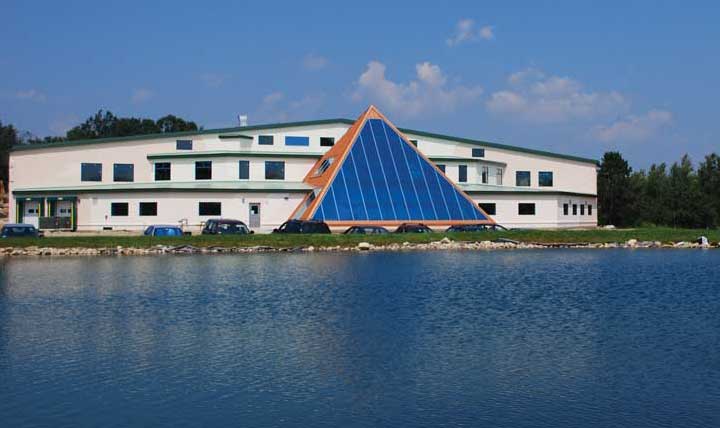
In addition to these religious institutions, there are commercial ones. This is where the boundaries really become porous. As mentioned above, Salem hosts numerous metaphysical bookstores. Bender mentions Seven Stars Bookshop in Cambridge and how it, along with other places like grocery stores, yoga studios, and health fairs, creates a network of commercial institutions that supply Metaphysicals with the goods and services they consume in the practice of their spirituality. In addition to these types of commercial enterprises, Salem offers us the opportunity to delve one level deeper to see the institutions that supply these independent companies. Salem is home to the national headquarters of Azure Green, one of the largest distributors of spiritual and occult products in the world. Housed in a building that includes a multi-story glass pyramid, Azure Green supplies the majority of the material sold by independent metaphysical bookshops. Combined with New Leaf Distributing, the nation’s largest metaphysical book and media distributor located just outside of Atlanta, these two companies homogenize the goods each store has to offer the metaphysical community. Thus, while the inside of the Bodhi Tree in Los Angeles may differ from Magus Books in Minneapolis, the majority of the books and goods sold in each are identical. Nevertheless, these stores also supply meeting spaces for discussion groups, tarot card readings, or ritual practice. Thus, while they are a commercial enterprise, they routinely house individual and group spiritual practices. Even non-metaphysical bookstores often house discussion groups for Metaphysicals. The now struggling Border’s Bookstores are host to a variety of Metaphysicals who use their stores and their coffee shops as meeting spaces.

A final example worth mentioning is the internet. While not of central focus to Bender’s study, the internet is probably the most important place that Metaphysicals use to build and coordinate their communities. Here certain websites become significant “institutions” for information exchange, community discussion, and meeting coordination. While some are organized by tradition, such as WitchVox, which allows pagans worldwide to meet and exchange messages and files, others are organized by geographic location, such as Meetup, which is used for people to create affinity groups and then meet in the non-virtual world. On this website one can find local yoga, astrology, or alternative health groups.

The differences between various metaphysical traditions are collapsing just as quickly as are the distinctions between religious and secular institutions that many religion scholars study. The boundaries between New Age practice, neopaganism, and yoga, for instance, are quite porous, as are the designations between what is and what is not religious. The “spiritual but not religious,” as Bender correctly notes, still depend on various institutions to maintain their practices and communities, but they do so in unusual ways. Ellwood is correct when he writes that people “active in religious or other larger meaning-giving organizations, are happier and healthier than solitaries or those who know only casual and informal relationships.” Yet how these solidarities manifest will continue to evolve and change in unexpected ways. As our field continues to grapple with these changes, it will be interesting to see how our methods attempt to capture these networks and communities. Ellwood ends his essay about the future of the Theosophical Society noting that it is “exciting to have the privilege of living in such times of change and challenge.” I think the same can be said for our field too!

Senin, 20 Desember 2010

American Buddhism as a Way of Life


Paul Harvey

A couple of new books of note, with short reviews from Choice:

1) American Buddhism as a Way of Life


I'll put the Choice reviews up as separate posts. First, for American Buddhism:

American Buddhism as a way of life, ed. by Gary Storhoff and John Whalen-Bridge. SUNY Press, 2010. 217p index afp; ISBN 9781438430935, $75.00; ISBN 9781438430942 pbk, $24.95. Reviewed in 2011jan CHOICE.
This useful series of essays focuses on ways Buddhism has been transmitted to the US in the late 20th and early 21st centuries. Beginning with an analysis of the influence of pivotal Buddhist teachers Alan Watts and D. T. Suzuki, this book proceeds to evaluate some basic elements of the fusion of the many forms of Buddhism into American culture, along with the pivotal tensions created by that fusion. One of the most valuable features of these discussions is the selection of such a wide range of examples illustrating a central point: that in spite of the apparent conflict in basic categories (e.g., Buddhism's emphasis on no self, impermanence, and interdependence versus the American culture of individualism, self-reliance, privacy, and self-promotion), large numbers of Americans, though not formally "Buddhists," have been profoundly influenced by Buddhism, while Buddhism has in turn demonstrated that it can adjust to American culture. The result is an original, representative, and thoroughly informative look at "American Buddhism" introducing itself into and becoming an accepted part of American life. Summing Up: Recommended. Lower-level undergraduates through faculty/researchers; general readers. -- J. M. Boyle, formerly, Dowling College

Selasa, 12 Oktober 2010

Leigh Eric Schmidt on Ida C. Craddock and Late-Victorian America

Randall Stephens

On October 18, 1902, the New York Times ran this curious obituary. Readers must have done a morning coffee spit-take:

"Chose Death Before Prison. Ida C. Craddock 'High Priestess,' Was to Have Been Sentenced for Circulating Improper Books"

Ida C. Craddock, 'High Priestess of the
Church of Yoga' in Chicago, and an exponent also of Spiritualism, Theosophy, and other creeds, committed suicide in her room, on the top floor of 134 West Twenty-third Street, yesterday, by inhaling illuminating gas and slashing her wrist. It was the day upon which she was to be sentenced again, as she had been several times before, for circulating books and pamphlets explaining her peculiar beliefs, built up from a conglomeration of Oriental religions. . . . Miss or Mrs. Craddock was forty-five years old. She was rather handsome, and was usually well gowned. She was born in Philadelphia, her parents being Quakers.

Leigh Eric Schmidt takes up Craddock's strange, fascinating story in his forthcoming Heaven's Bride: The Unprintable Life of Ida C. Craddock, American Mystic, Scholar, Sexologist, Martyr, and Madwoman (Basic Books). Much of it is startling, to say the least. In an era of buttoned down formality and Protestant prudery Craddock broke more rules than one could shake a ruler at. She dabbled in all manner of fringe-ish religion. The one-time Methodist moved with some ease into Quaker circles, Spiritualism, Free Thought, Eastern Mysticism, amateur biblical studies, Sexology . . . .
For some time she lectured as a self-proclaimed expert on phallic cults. Not a typical Chautauqua circuit subject.

Schmidt, with narrative skill and analytical insight, draws on Craddock's life to tell a broader tale of American religion in this age as well. (It's made me wonder about what we can learn about the whole from unusual subjects.) Says Schmidt: "The retrieval of Craddock's life from the vaults of vice suppression offers an entryway into major social and political issues of her day--and, often enough, of our own as well" (xi). She tested the country's Christian identity and it's moral certainty. In small ways, her exotic religious and secular outlook foreshadowed later developments: religious seeking, experimentation, new age dabbling, secular crusading. ". . . Craddoock floats only occasionally into view as a feminist," precursor, Schmidt observes, "a tragic free-speech martyr, a steamy occultist, or a sexologist ahead of her time. The diaphanous quality of those memories should not dissolve the grainy roughness of her life, the audacity and disrepute of it" (273-74).

In the interviews embedded here, I ask Schmidt about Craddock's career and her higgledy-piggledy path from Methodist to sexologist. Schmidt reflects on the larger meaning of religious dissent in these years and discusses the shape of American religion in the late-Victorian age. In part two of the interview he also comments on a couple of his current projects.
Related Posts Plugin for WordPress, Blogger...