Tampilkan postingan dengan label regional religious traditions. Tampilkan semua postingan

Rabu, 08 Juni 2011

After Cloven Tongues of Fire, The Nation (Magazine) Gets Religion

Paul Harvey

I think a lot of you are out there are having fun thinking about Elesha's provocative post yesterday Do Religion Scholars Read the Bible, and the conversation about it will continue tomorrow with a follow-up post by Janine -- but in the meantime here are some more items of great interest that passed my way today, and very much related with one another.

First, The Nation magazine has given one of its reviewers, Chris Lehmann, ample space to discuss together Darren Dochuk's From Bible Belt to Sunbelt alongside Matt Sutton's Aimee Semple McPherson and the Resurrection of Christian America (which, as some of you know, was John Updike's alltime favorite book in his New Yorker review). Subscribers can read the review here, and the rest of you will have to track it down somewhere else, but if you're at a subscribing library as I was today it will show up as well.

Lehmann's lengthy discussion is fascinating, and framed in a way I have not seen before; he begins by discussing Golden State high-tech boosterism characteristic of TED conferences, Wired magazine, and the early Whole Earth catalog, and then tries to figure out how religious conservatives previously suspicious of free market orthodoxies (as discussed in Darren's book) came to be in the same camp as the "Californian ideologues" who preached "an anti-statist gospel of hi-tech libertarianism," concluding that "No less contradictory than the gospel truths of the California digerati, the dogmas of West Coast evangelicalism proved instrumental in acculturating an earlier generation of Jeffersonian golden dreams to a life of abundance bolstered by government-driven subsidies and development policies that, over time, they came to despite with a righteous fury."

Anyway, given a few years separation of publication dates, I have not seen Dochuk and Sutton's works considered together elsewhere, but they are here, and very fruitfully. Plus, Lehmann picks out some stories from Sutton's book about McPherson, who of course is an endless fount of fascinating tales, which I had forgotten about. And yes, that "who" pronoun was deliberately ambiguous.

Next semester I'm having my MA students read Sutton's biography of Aimee together with Jennifer Burns's Goddess of the Market: Ayn Rand and the American Right -- a wonderfully engaging book I'm just now finishing. I'm expecting this pairing to lead to a great class discussion -- two of the most self-inventive Americans of the twentieth century, with personal sagas which no fiction writer could make up (indeed, fiction writers of McPherson's time modeled characters after her precisely because they could not make her up), but obviously at opposite ends of the spectrum in their relationship to Christianity. Or maybe not, since Rand's visceral hatred of religion didn't prevent her from creating her own version of a rigid belief system.

The other article to call your attention to is David Hollinger's Presidential Address at the Organization of American Historians meeting in Houston a few months back, which is now published in the Journal of American History:

"Presidential Address: After Cloven Tongues of Fire: Ecumenical Protestantism and the Modern American Encounter with Diversity," by David A. Hollinger

It bears mentioning that Hollinger, who teaches at Berkeley, was the PhD advisor for blog friend and occasional contributor Kevin Schultz, whose book Tri-Faith America has received attention here, as well as of Jennifer Burns, author of the Rand biography just mentioned above. Congratulations to Prof. Hollinger for his OAH presidency and for the outstanding work that his students are doing.

Here's a brief summary of the main point:

In his presidential address to the 2011 Organization of American Historians annual meeting, David A. Hollinger argues that the flourishing of evangelicals and the membership decline of ecumenicals since World War II constitute a single dialectic driven by contrasting dispositions toward ethnoracial, sexual, religious, and cultural difference. More sensitive than their evangelical rivals to the diversity of American society and of the globe, ecumenicals abandoned a series of ideas that were not supportive of diversity, but those same ideas remained popular with the white public that was the chief constituency of Protestantism. Evangelicals then energetically espoused ideas such as the notion of a "Christian America" to appeal to Americans dubious of the accommodations with diversity that ecumenists had enacted with secular liberals. Americans become increasingly comfortable with the liberal ideas espoused by the ecumenical churches, while Protestantism itself became an evangelical stronghold.

What is interesting here -- among many other things -- is that the histories of "mainline" or "mainstream" Protestants have been largely considered separately from the "rise of the evangelicals" historiography, and Hollinger suggests one way to bring them together.

I hope my buddies over at U.S. Intellectual History might take up some of the ideas discussed by Hollinger and weigh in on his argument -- down the road when people have had a chance to read it, of course. In the meantime, if you historians out there haven't joined the OAH, what's wrong with you?

Sabtu, 28 Mei 2011

Jesus and Jefferson: Mark Noll Reviews Dochuk and Williams in The New Republic

Paul Harvey

Here's a discussion of interest to many: Mark Noll reviews Daniel Williams, God's Own Party, and Darren Dochuk, From Bible Belt to Sunbelt, in the most recent New Republic -- a teaser is online, but you'll have to get the magazine for the rest (or, email me and I'll send to you). Here's a small excerpt:

Recent studies have begun to do better, with two of the best being these books by Daniel K. Williams and Darren Dochuk. Williams, who works from the top down in attempting a broad national perspective, does as well as any writer to date in answering the basic questions of what went into making up the religious right and specifying when the movement coalesced. Dochuk, who works from below in a superbly researched study of grassroots political mobilization, goes far to answer the question of where it came from. The solid history in these volumes should be applauded by all as a welcome alternative to the frenzy of earlier efforts. Yet neither Williams nor Dochuk addresses directly what should be one of the most compelling questions about the political history they describe so well: what exactly is Christian about the Christian right

You will remember we have posted extensively about these important new works, and have put up interviews with Williams here and Dochuk here. Noll adds to the discussion with an interesting conclusion reflecting on historians' own moral evaluations. Noll writes: "neither of these writers carries out the moral evaluation, that, especially, in tandem, their volumes make possible," and then a bit further down,

The merger of Jesus and Jefferson that propelled the New Christian Right was neither made in heaven, as in the eyes of its proponents, nor was it a cynical exercise in hypocritical self-interest, as often portrayed by its opponents. It was rather a historically constructed contingency that, judged from a broad Christian perspective, deserves to be both applauded and denounced."

And he concludes:

Theirs [evangelicals'] is not the tradition of Rerum Novarum, Quadragesimo Anno, or Mater et Magistra. It is instead the tradition of Charles G. Finney, who in the 1830s declared that the problem of slavery could be resolved “in three years’ time” if only slaveholders would recognize that slaveholding was a sin. It is the lineage of Billy Sunday, who in 1919 predicted that Prohibition would empty American prisons and transform the country into a heaven on earth.

The flourishing of conservative evangelical politics in recent American history has done considerable good through the exercise of instinct, anger, energy, and zeal. It would have done much more good, and also drawn nearer to the Christianity by which it is named, if it had manifested comparable wisdom, honesty, self-criticism, and discernment.

Selasa, 17 Mei 2011

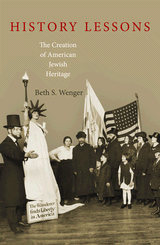
History Lessons: Creation of American Jewish Heritage

Paul Harvey

A bit later today or early tomorrow Chris Beneke will be posting his thoughts on Kevin Schultz's new and very important book Tri-Faith America. Before we get there, I thought I would call your attention to this new work on American Jewish history from Beth Wenger, reviewed in this month's Choice: History Lessons: The Creation of American Jewish Heritage. This book is about the creation of history and meaning in American Judaism, about how "memory" becomes "history" and "heritage" within this religious community, and about how history creates identity. I'll post a brief bit from the book's website first, and then the review from Choice.

From the book's website:

Most American Jews today will probably tell you that Judaism is inherently democratic and that Jewish and American cultures share the same core beliefs and values. But in fact, Jewish tradition and American culture did not converge seamlessly. Rather, it was American Jews themselves who consciously created this idea of an American Jewish heritage and cemented it in the popular imagination during the late nineteenth and mid-twentieth centuries. History Lessons is the first book to examine how Jews in the United States collectively wove themselves into the narratives of the nation, and came to view the American Jewish experience as a unique chapter in Jewish history.

Beth Wenger shows how American Jews celebrated civic holidays like Thanksgiving and the Fourth of July in synagogues and Jewish community organizations, and how they sought to commemorate Jewish cultural contributions and patriotism, often tracing their roots to the nation's founding. She looks at Jewish children's literature used to teach lessons about American Jewish heritage and values, which portrayed--and sometimes embellished--the accomplishments of heroic figures in American Jewish history. Wenger also traces how Jews often disagreed about how properly to represent these figures, focusing on the struggle over the legacy of the Jewish Revolutionary hero Haym Salomon.

History Lessons demonstrates how American Jews fashioned a collective heritage that fused their Jewish past with their American present and future


And now, the review from Choice:

Wenger, Beth S. History lessons: the creation of American Jewish heritage. Princeton, 2010. 282p bibl index afp ISBN0-691-14752-3, $35.00; ISBN 9780691147529, $35.00. Reviewed in 2011jun CHOICE.
American Jews created narratives about Jews in US history in order to establish a collective heritage. Wenger (Pennsylvania) demonstrates that these stories related a Jewish past to US histories in ways that were sometimes celebratory and sometimes critical, but they always sought to establish a place for Jews within US myths and thereby the US present. Wenger analyzes a "dual agenda" in which Jews both "wrote themselves into the narratives of American history" and narrated their own lives as hopeful endings to the "long history of the Jewish people." In exploring these narratives and counternarratives, Wenger provides fascinating primary sources, from didactic Yiddish poetry to letters hotly contesting the erection of a statue. The volume includes examinations of the particular political and cultural facets of US life that allowed Jews to "create" their own heritage and identity; the representation of US Jewish soldiers; children's literature; efforts at memorializing the Revolutionary financier Haym Solomon; and a standout chapter on Jews' relationships to US national holidays. Although Wenger's conclusions may not be surprising for those familiar with US Jewish history, her readings are subtle and compelling. Summing Up: Recommended. All academic levels/libraries. -- S. E. Imhoff, Indiana University / Bloomington

Minggu, 15 Mei 2011

From Bible Belt to Sunbelt, Redux: Part II of Darren Dochuk Interview

Paul Harvey

Below I'm reposting part II of my interview with Darren Dochuk, author of From Bible Belt to Sunbelt: Plain Folk Religion, Grassroots Politics, and the Rise of Evangelical Conservatism. Part I of the interview is here. Part II was posted last week, but Mr. Monster-Blogger program ate it, so let's try this again. Hey, Mr. Blogger Man, play this post for me, I'm not sleepy and there is no place I'm going to.
_____________________________________________

PH: You begin the book with one of the most famous tropes of American religious history -- the errand in the wilderness -- and use it to situate the plain folk from the South/Southwest that you are going to follow through the book. You write: "these white southern evangelicals envisioned themselves as pilgrims carrying out their own errand into the wilderness." Can you describe briefly how they saw that "errand," and more about what kind of world they hoped to create in that "wilderness"?

DD: While reading church newspapers like the California Southern Baptist and the Assemblies of God’s Informant I was struck by the way southern evangelicals approached their new home as if on a mission; pastors, editors, and denominational leaders all spoke of being on an “errand.” This isn’t uncommon among migrant groups, since uprooted-ness tends to encourage notions of exceptionalism, but I thought it was suggestive that southern evangelical migrants approached their move this way. Considering their impressive numbers, southern evangelicalism’s built-in entrepreneurialism, and the freedoms of Los Angeles’ hinterland, it seemed significant that southern evangelicals encountered their new home with a confidence that could affect change. Able to move from the small town south to self-contained suburbs, these sojourners didn’t feel the jarring effects of migration that we see in Steinbeck’s Grapes of Wrath, in which Old Testament motifs of banishment (“exodus” and “exile”) are stressed. This isn’t to discount Steinbeck, or historians like James Gregory, who rightly and beautifully describes the hardships southern migrants faced in California. Still, I think the errand motif is a helpful qualifier, because it stresses the empowerment southern evangelical migrants felt (and were told to feel) when resettling on the West Coast.

And to be honest, I also found it intriguing that these sojourners did what they set out to do—impose their will on their wilderness in order to awaken their people back home. Meant to give hope to an uprooted people, the “errand” motif (as exaggerated or skewed as it may have been) in fact became a blueprint of sorts that these sojourners followed to a tee. In the immediate, they used it as justification to carve out strong, independent churches, ministries, schools, and communities in which they could codify principles of individualism, local autonomy, laissez-faire economics, and family values. In the long-term, they used it to help fashion this amalgam of beliefs into a coherent political strategy—the GOP’s Sunbelt strategy—that would win the hearts and votes of the people they left behind in Oklahoma and Texas, and ultimately win them access to Washington’s halls of power. So, although a neat rhetorical device (another reason why I used it), the errand motif also points us to a real, lived experience that few historians have fully appreciated in the context of post-war religious and political change.

PH: As you know, the role of race within the "silent majority" is a major controversy of the historiography of twentieth-century conservatism. How did the people you write about conceptualize race in their worldview, and to what degree could they be seen as wanting to build communities, consciously or not, that preserved the privileges of whiteness?

Part of the challenge in writing a character driven narrative, as I tried to do, is that it’s tricky to delineate between subtle but important shades of racial views and measure structural forces of exclusion alongside attitudinal ones. It’s difficult to unpack this entire complex; others, like Paul Harvey, David Chappell, Joe Crespino, and Ed Blum, have done a more thorough job of it. That said, my book tries to offer a basic insight or two.

First, I think the racial “backlash” storyline is too simplistic. Other historians have stressed this point, but the sense that evangelical conservatives have acted (and continue to act) out of some sort of race rage remains strong. In terms of attitudes, the southerners I study came west with assumed notions of white privilege, and throughout the 1940s and 1950s they built churches and communities that sought (consciously or not) to protect this privilege. Southern California’s decentralized suburbs made this easy. But there was room within this worldview for preachers and parishioners to reconsider their views in light of California’s multicultural landscape; during the 1960s and 1970s many did, some didn’t, at least initially, and a few took it upon themselves to ensure that their neighborhoods remained white only. What is important, though, is the degree to which California evangelicalism’s moderates rose to the forefront and, through increasingly interracial ministries and interracial alliances (with black Baptist and Latino Pentecostals, for example), forged a post-racial, “color-blind” conservatism that celebrated the virtues of free markets and family values beyond white-nonwhite divided. Part savvy, part sincere, California’s color-blind conservatism certainly had its internal contradictions and limitations, but the point is that it allowed evangelicals and conservatives generally to turn their political attention to other pressing matters, like gender, women’s rights, and sexuality, and form a more centrist Right that could win the nation.

Again, this isn’t to diminish or write race out of the story as much as it is to complicate it a bit. Certainly, in terms of structural forces, my subjects contributed to a much larger system of racial exclusion, one in which their conservatism (either in its Jim Crow form or in its color-blind dispensation) was ill equipped to provide systematic answers. But then again, few Californians, liberal or conservative, Democratic or Republican, could locate or agree on answers at the time. Southern evangelicals didn’t have to teach Southern Californian’s how to be racist, in other words, nor did they alone make Los Angeles the most segregated American city; systemic economic inequities created these divides, and whites of all class and partisan persuasion perpetuated them. To pin too much on evangelical conservatives is to miss a master narrative of prejudice in which everyone is implicated. At the same time, to downplay or lose sight of race and racism in evangelical conservatism’s history is equally dangerous. However explicitly or not, however innocently or not, the people I study made decisions based on a range of social, economic, theological, and political motivations that had lasting, negative consequences for race relations in California and the country, and that legacy is still with us today.

PH: Talk briefly about how much influence the John Birch Society and like minded groups played for the coming together of evangelicalism and conservatism which you trace in the book? Would you agree with Lisa McGirr that, while the Birchers eventually of course got pushed out of mainstream conservatism by politicians such as Reagan when he was governor, that the Birchers nonetheless were central for a certain time in galvanizing people at the grassroots?

Lisa McGirr rightly emphasizes the John Birch Society’s key role in Southern California’s Right. The JBS certainly nurtured a sharper-edged, fundamentalist conservatism that responded well to the “extremism…is no vice” side of Goldwater’s GOP. But what I found so remarkable, when tracking this group, was how “normal” it seemed as a type of social club for average suburbanites. Political ideas mattered to JBS members, and they acted on them with strong conviction, but the society also functioned as a gathering space in which businessmen, engineers, and housewives could debate free market principles and talk about neighborhood issues and current events.

This was just as true (if not more so) among transplanted southerners who worshipped in fundamentalist Baptist churches associated with J. Frank Norris and the Baptist Bible Fellowship—out of which John Birch emerged as a missionary during World War II. Whether they joined the JBS or not, members of BBF churches held John Birch in high regard, and viewed the JBS with respect as a front-line organization fighting the good fight for all patriotic Christians. Such steadfast commitment to the JBS cause, in fact, made JBS leaders nervous. Churches like Tim LaHaye’s in San Diego were so welcoming of JBS members and ideology that they made the JBS redundant; who needed a JBS cell group when megachurches offered the same teachings in a livelier setting? JBS leaders tried to steer their members away from LaHaye and other Baptist churches, but to no avail.

The larger point, though, is that the JBS was critical to California conservatism’s pre-1966 history. Even after Reagan purged JBS members from the GOP—a key step in conservatism’s move from the Goldwater margins to the Reagan center—Southern California’s independent Baptists would remain fiercely loyal to the JBS message. And in a way, their pulpits and pews would become even more important conveyances of this message after the JBS was forced underground.

PH: Your book traces the triumph of your subjects in reorienting the politics and culture of a nation, yet the book's epilogue ends with some of your key characters (such as Oklahoma migrant Jean Vandruff, whose entire life trajectory your follow as emblematic of the broader processes you discuss in the book) wondering about their "community's moral fabric and political future." Do you think the main subjects of your book perceive their "errand in the wilderness" from the New Deal to the present day to have been a successful one?

I begin and end the book with Jean Vandruff because he’s the man who got the project rolling—I started thinking about the southern migration angle soon after interviewing him. It was striking to hear Jean talk about his community’s life story in a rise and fall pattern—as if the errand was achieved by 1980 then lost again. On one hand, this isn’t that unusual—generational change is easily couched in these terms.

But on the other, I thought it was quite suggestive of how evangelicals saw their movement after 1980. When talking to others, I got the sense that the Cold War era was really good for evangelicalism, and that this prosperity crested in the 1970s, but then declined. And it’s true—this decade did see California evangelicalism emerge as a national trendsetter. As I point out in the book, the “born again” phenomenon that swept America was, in many ways, a California creation. And things in Southern California did change dramatically after 1980—the loss of defense contracts and tax bases meant local economies struggled (leaving some communities, like Orange County, bankrupt, and churches struggling to stay afloat), and shifting migration patterns meant that California’s Cold War evangelicalism was no longer primed for the future.

Of course, it’s easy to stress this too much. Evangelicalism has always thrived on the declension narrative—the first generation’s tribulation is always viewed by the next as opportunity calling, and in evangelical circles the “errand” is never done; this, after all, is evangelicalism’s life source. So it’s dangerous to overplay this rise and fall pattern. Moreover, as a religious movement, evangelicalism did adjust its vision—its “errand”—and find new frontiers after the 1970s, in newer suburbs built between Anaheim and San Diego, west towards Riverside, and north towards the Central Valley. By the 1990s it would also find its way back into the city as a movement that new immigrant groups and more diverse communities could revitalize according to their own emphases. As a political movement, evangelicalism continued to extend its grassroots influence into the 1990s and 2000s as an arm of the GOP. It would do so, however, amid the rising influence of other conservative constituents (Catholic and Mormon), and an empowered liberal Democratic opposition.

So, by adopting the language of an errand won then lost, perhaps my book contributes to a slightly skewed outlook. Overstated or not, however, I think Jean Vandruff’s assessment isn’t far from the truth: that the Reagan years (1966-1974) were California evangelicalism’s golden years.

Selasa, 10 Mei 2011

From Bible Belt to Sunbelt: An Interview with Darren Dochuk

Editor's Note: I'm delighted today to post the first of a two-part interview (the rest will come tomorrow) with Darren Dochuk, author of the recent and much-noted book From Bible Belt to Sunbelt: Plain Folk Religion, Grassroots Politics, and the Rise of Evangelical Conservatism, published last year by Norton. The dissertation version of this work won the Allan Nevins Prize, and now in published form I predict the work will be a top contender for some of the big forthcoming prizes. Here's a brief rundown on the work, from the book's website:

From Bible Belt to Sun Belt tells the dramatic and largely unknown story of "plain-folk" religious migrants: hardworking men and women from Oklahoma, Texas, and Arkansas who fled the Depression and came to California for military jobs during World War II. Investigating this fiercely pious community at a grassroots level, Darren Dochuk uses the stories of religious leaders, including Billy Graham, as well as many colorful, lesser-known figures to explain how evangelicals organized a powerful political machine. This machine made its mark with Barry Goldwater, inspired Richard Nixon's "Southern Solution," and achieved its greatest triumph with the victories of Ronald Reagan. Based on entirely new research, the manuscript has already won the prestigious Allan Nevins Prize from the Society of American Historians. The judges wrote, "Dochuk offers a rich and multidimensional perspective on the origins of one of the most far-ranging developments of the second half of the twentieth century: the rise of the New Right and modern conservatism.

Of course, an endorsement of this work from a justly obscure historian such as myself means jack, so let's look at what some of the premiere historians of our time (Kevin Starr, Michael Kazin, and Sean Wilentz) have to say about it:

The nation is today color-coded into red and blue. In this tour de force of research, narrative, and analysis, a brilliant young historian chronicles how Southern California served as the matrix for this enduring bifurcation. Beneath the sunshine and the palm trees, uprooted evangelicals experienced a Great Awakening that transformed American politics in our era.” — Kevin Starr, University of Southern California

“With narrative authority and sparkling insight, Darren Dochuk explains how and why Southern California became the crucible of the Christian Right. Anyone who wants to understand the history of modern American conservatism should read this book.” — Michael Kazin, author of A Godly Hero: The Life of William Jennings Bryan

“Darren Dochuk's fortunate readers are in for some surprises as well as for enlightenment. The story of the Dust Bowl and the migration to southern California during the Great Depression, usually told through the left-wing tale of Tom Joad, turns out to be prologue to the rise of a vital segment of the modern Christian Right. From Bible Belt to Sunbelt is an essential contribution to our growing understanding of the origins and development of contemporary American conservatism.” — Sean Wilentz, author of The Rise of American Democracy

Just as a final note, I used this work this semester in conjunction with Bethany Moreton's To Serve God and Wal-Mart (which we've featured extensively on the blog before, and is also reviewed, somewhat more critically, here) and Jefferson Cowie's fascinating new book Stayin' Alive: The 1970s and the Last Days of the Working Class (reviewed at length by Rick Perlstein here). Taking the three together -- with Dochuk and Moreton centrally featuring religious themes and characters, and Cowie scarcely mentioning religion as his interests/subjects lie elsewhere -- made for a fascinating comparison and contrast of recent history, especially the 1970s. In truth, by very different routes, the authors end up in some similar places, but perhaps the routes are more interesting than the final destination. For more extensive discussion of the emerging historiography of the 1970s, see the fine discussion over at U.S. Intellectual History.

Without further adieu, it's question time for Darren.

Update: Part II of the interview is here.
_________________________________________________
PH: Darren, how does a volleyball star like you from the Great Plains of Socialist Canada end up studying and writing this massive book about conservative southern evangelicals in twentieth-century California? Take us through some of your professional trajectory that got you to this book.

DD: The Great Plains, Socialist Canada, and volleyball may have had something to do with my obsessions. As a kid growing up in Alberta, I had a warped fascination with all things American; I read more about George Washington than John A. Macdonald, I loved U.S. college football, and my family’s annual vacation usually took us south (Edmontonians don’t drive north unless ice fishing or moose hunting are in order). South meant Southern California, a place where we could escape the Great Plains tundra for beaches and Disneyland. It wasn’t uncommon for us to use some of the 30 hours of driving time to debate why Americans hate government so much and Canadians don’t think it’s so bad. Then, while playing university volleyball, I had the chance to compete against California programs I followed as a high schooler. I had the best match of my career against the Pepperdine Waves, despite being heckled by some brutally tough fans. So perhaps the book can be boiled down to catharsis—some subconscious attempt to reclaim (or maybe purge) a familiar past…but I’ll leave that up to my sister psychologist to figure out.


The “professional trajectory” can be summed up more simply. While struggling to find a Ph.D. dissertation topic, I read (and loved) Lisa McGirr’s Suburban Warriors and thought more could be done to explain Southern California conservatism, so I set out to do it. My goal was to write a book that embedded evangelicalism in the larger story of post-1930s politics by teasing out its connections to suburbanization, political economy, race relations, and the politics of labor, education, housing, and business. I wanted to thread evangelicalism into mainstream narratives of U.S. political history, which still tend to paint evangelicalism as a sideshow.

PH: I read somewhere, on another online interview I think it was, that in part this book is a response (and historical critique) of the "What's the Matter with Kansas" thesis, which of course holds that a fair number of Americans have been effectively snookered into voting against the own material economic interests by forces which have sold them on a falsely cultural populism. Am I right in seeing this book in part as a response, and if so, how so?

DD: I didn’t set out to address Frank’s thesis, but my book touches on a few of its themes. At the least, it tries to add a layer of complexity to Frank’s notion that Main Street populists have been “duped” by Wall Street corporate types into voting against their economic interests. First of all, the “duped” motif has its limitations. Some of the Wall Street types I include in my story could be classified as evangelical populists themselves whose own politics covered a range of issues beyond their pocketbooks; economic interest wasn’t their sole interest. And many of the Main Street types I talk about continually measured their economic interests against the “culture wars” agenda they’ve purportedly been spoon-fed from above, so to say they were snookered into doing something against their wellbeing shortchanges their own capacity as rational political actors.

Along this same line, I think Frank’s provocative critique also downplays the processes of negotiation that have taken place between Wall Street and Main Street over the past half-century. The people I talk about were embroiled in a struggle against liberalism that started much earlier than the culture wars of the 1960s and 1970s, and the alliances they forged to fight their battles were not static, uncontested, or permanent. The Main Street evangelicals I write about were never perfectly or entirely or always willing to do Wall Street’s dirty work in the trenches, and the evangelical businessmen I talk about sometimes acted on behalf of their rank-and-file brethren in ways that defied fiscal logic.

And ultimately, I’m hesitant to say someone is voting or acting against their best interests, as if I have some deep wisdom they don’t; I can’t even figure out what my own best interests are, let alone someone else’s, so I’m not that eager to pass judgment.

PH: The people you study didn't wait around for Rand Paul or the contemporary Tea Party to develop a pretty deep-rooted antipathy towards the New Deal and the expanded state that came out of the New Deal. Ironies abound here, of course, since the processes set in motion by the New Deal brought many of them to California in the first place. When did the subjects you study come to distrust the New Deal state, and how did they get to that point given their origins as poorer folk who were supposed to be one bulwark of the New Deal coalition? What role did religion play in that critique?

DD: I don’t think the people I study ever truly trusted the New Deal state. They certainly relied on it during times of trouble and they believed it was their right as white American citizens to do so; however contradictory or not, they thought that the federal government had a responsibility to provide short-term aid in exceptionally bad circumstances, and be the last resort in times of need. Roosevelt came through for these citizens, and they returned the favor by supporting him. But their first choice was always a limited state; as soon as times got better, Washington, they believed wholeheartedly, was to move aside.

When government didn’t move aside, they got angry. Their anger was politicized right after World War II, during the labor wars that erupted in the defense plants and neighborhoods that had lured them west.

Amid post-war adjustments, when California’s Social Democrats pressed for an active government that would support industrial unionism and race reform—for an expanded New Deal, in other words—southern evangelicals attempted to protect their interests as white workers and homeowners through a movement called Ham and Eggs, which combined calls for Christian revival and morality with a championing of the independent producer. This was William Jennings Bryan’s (and Huey Long’s) Populism reborn, and it scared Social Democrats, who believed that Ham and Eggs was irrational and racist. Ham and Eggs failed, leaving liberals in charge of California’s Democratic Party and evangelicals convinced that a coordinated assault on “big labor” and “big government” was in order. It’s in this moment that they began recasting Roosevelt and the New Deal as twin evils that had allowed socialism to creep in to American society.

It’s also in this moment that they began shifting their party affiliation to Independent and Republican. Evangelical businessmen, who at the time were helping form an anti-statist/free market movement, urged their fellow churchgoers along in this thinking. These sides would unite in the 1950s thanks, in large part, to Right-to-Work campaigns, which sought to rollback the power of unions in the workplace (sound familiar?).

PH: It's rather amazing to me that in reading your book alongside Bethany Moreton's To Serve God and WalMart, two previously obscure tiny colleges in Arkansas - John Brown University and Harding University -- have suddenly become central to the narrative of twentieth-century religion and conservatism, and hence to the entire narrative of twentieth-century American politics (I should add here that my cousin's son, who grew up in California, attends John Brown U.). As far as California higher educational institutions go, only Pepperdine plays as central a role in your book. Tell us something briefly about those two institutions, and what role they play in your book

Funny thing is, Bethany and I met in the one-room archive of John Brown University, tucked away in the foothills of the Ozarks. We were told that no researcher had visited in quite some time…yet there we were, two dissertators from “up north” eagerly flipping through files and splitting time at the photocopier.

The reason we were there is because we recognized that evangelical institutions have rich stories to tell. Historians often focus on preachers and the pews when tracking the evangelical Right. But a much thicker history of this phenomenon emerges when we follow the money trails that link evangelical schools to their patrons (highly politicized businessmen), or read between the lines to see how a college’s pedagogy endorses certain political expressions.

So, for instance, John Brown University and Harding University wrapped their pedagogy in a curriculum (“Head, Heart, and Hand”) that stressed practical education in the trades and business, full immersion in boots-strap entrepreneurialism, and staunch defense of traditional family values. These schools’ founders saw that this curriculum as a counter to the liberal elitism of the Ivy League, and the only answer to society’s “socialist” drift. Like countless other southern colleges, these two schools were near financial collapse in the 1930s. To save themselves—and preserve their independence—they approached the nation’s most powerful (and often evangelical) corporate leaders for support and got it, with the promise that they would train the next generation of evangelicals in a corporate-friendly environment. During the Cold War, as public education expanded and private schools faltered, John Brown, Harding, and their peer institutions stepped up their search for corporate help, by hosting annual “Freedom Forums,” for instance, which gathered CEOs, educators, and activists from around the country. In reaching out in this way, at such a formative moment in American political development, these schools essentially became the conservative movement’s first “think tanks” and marshaling zones.

I think a second benefit of studying these schools is the way they account for regional change in the post-Depression era. One of my book’s goals was to track the emergence of a Sunbelt axis of power—of the kind Kevin Phillips and Kirkpatrick Sale first designated in the 1970s as spanning from California to the Carolinas. Scholars have debated the strengths of the Sunbelt thesis, with detractors often stressing important differences in Atlanta, Houston, and Los Angeles’ metropolitan politics, or the disjuncture between notions of citizenship in Oxnard, California and Oxford Mississippi as reasons to jettison the concept. I think the Sunbelt concept is useful, and one way I saw it play out was in the realm of evangelical higher education. The more I dug the more I became fascinated with the way these schools (as well as west-coast ones like Pepperdine) linked the futures of the South and West through institutional channels, laying the groundwork for a broader, Sunbelt powerbase. Critics of the Sunbelt thesis claim that their research on urban development doesn’t bare the burden of this concept, but perhaps they should look to simpler data for evidence—bank statements for Christian colleges, which demonstrate Californian, Texan, and Floridians’ shared investment in places like John Brown University, or school enrollment books that track the flow of teens from Tulsa to Los Angeles, Orange County to the Ozarks—teens with last names like “Harvey."

Update: Part II of the interview is here.

Jumat, 06 Mei 2011

Ain't No Grave: The Life and Legacy of Claude Ely

Paul Harvey

Here's a great radio story, courtesy of Radio Diaries and NPR, about the Rev. Claude Ely, Holiness/Pentecostal exhorter and singer from Kentucky and author of the classic "Ain't No Grave Gonna Hold My Body Down." Johnny Cash's recording of the song just before he died, and a huge internet mashup done to that recording, was the subject of a post of mine some time ago. A brief excerpt from the transcript of the radio show:

People would show up to revivals because they had heard about this country singer who sang like a black man. Brother Claude Ely would thrash his guitar, shake and gyrate from one part of the stage to the other. Young men would run up to wipe the sweat off his forehead.

Gladys Presley, Elvis' mother, was a fan of Brother Claude Ely's ministry, and some people remember Gladys and Elvis getting blessed at Brother Claude Ely tent revivals while Brother Claude Ely laid hands on them and prayed for them.

This story comes from the efforts of Macel Ely, Brother Claude's nephew, who encountered his uncle's music while traveling in Europe, and wondered how it found its way there. Evidently he is producing a full-length documentary on the subject. You can hear Ely's rendition of his song along with some photos here, and a CD compilation of Claude can be found here.

A final note: somehow those who prattle on about NPR's "liberal bias" somehow never get around to talking about stories like these, which took up most of the last segment of yesterday's show from that dreaded bastion of left-wing propaganda, All Things Considered -- never mind all the locally produced reporting such as the programs about Colorado which I have written about here, and the programs about the Ozarks which John Schmalzbauer has written about for Immanent Frame here.

Here's some more information on Macel Ely's book which came from his efforts to find out about his uncle's widespread influence, Ain't No Grave: The Life and Legacy of Brother Claude Ely (published by the wonderful Atlanta outfit Dust-to-Digital, compiler and publisher of the peerless six-CD set Goodbye, Babylon, and many other musical classics).

Ain’t No Grave: The Life and Legacy of Brother Claude Ely is written as an oral, biographical history taken from the recorded interviews of more than 1,000 people in the Appalachian Mountains who knew Brother Claude Ely. Coined as the King Recording Label’s “Gospel Ranger,” Brother Claude Ely was well-known and loved by many in the earlier part of the 20th century as both a religious singer-songwriter and a Pentecostal-Holiness preacher. Few people, however, knew the personal details of his childhood, military service, and years of hard work in the coal fields of southwestern Virginia.

Now, decades after his legendary death, many fans still seem mesmerized and touched by this humble man’s quick wit and sincere desire to share the Gospel’s “Good News” with everyone who would listen to his message of hope and love. Having received popularity for his song, “There Ain’t No Grave Gonna Hold My Body Down,” Brother Claude Ely passed along a musical and spiritual influence which can still be heard today like a mountain echo in those long, winding hollows and impoverished coal fields. Hollywood and the “King of Rock and Roll” also later acknowledged their admiration for and fascination with the late Brother Claude Ely. This book chronicles the life of one man who made an eternal impact on thousands of Appalachian dwellers. His simple sermons and folkloric songs are still providing assurance, hope, and faith to many mountain people

Selasa, 03 Mei 2011

Tuesday Merry-Go-Round: From Oprah to Rob Bell to Chick-Fil-A to R. J. Rushdoony's Righter-Than-Thou Economics (And Why They all Matter)


Paul Harvey

If you're like me and pushing your red pen up a Sisyphean pile of papers, you may not have time to get to any of these good reads right away, but I'll put some good stuff to read later for you up here so you can get to it when you can get to it. Yes, it's miscellaneous but good links day here.

First, we've noted here the great set of dialogues going over at Immanent Frame (with 12 substantive and engaging responses now) on Kathryn Lofton's Oprah: Gospel of an Icon. The latest entrant in the conversation is our friend Tracy Fessenden's O Tedious Selfhood, a wonderful and very funny take. A brief taste:

How has the trajectory of American religious history brought us to this place, this Oprah?

A thumbnail history might go like this: The Protestant sanctification of the commonplace, the discovery of divine light in the mundane array of objects and acts taken up by a priesthood of believers, proves a boon to American merchants and clerics alike. As Protestantism finds itself more and more at home in the New World, its religious dispositions and their modes of production become less separable from everyday life—indeed, they come to make up the fabric of everyday life. This means your life. The erstwhile Puritan discipline of self-scrutiny brings the things of the world increasingly into its purview, reading them for the shimmering glint of spiritual favor. Advertising, the most aspiring of evangelical preaching’s bastard offspring, offers the promise of entry into a more charismatic life in exchange for the dissipation of spiritual and economic capital: buy, believe, buy and believe more. Consumer choice and religious option open along the same paths, obscuring relational possibilities and imperatives that might bind you to a particular past, a more circumscribed future, to anything that might constrain the unfolding of your own best life. Women gain ground in the commercial revolution faster and more easily than they wrest standing from church authorities, leaving the latter to play catch-up with the consumer culture they helped to foster. Buy and believe. Find what works for you. Purveyors of spirituals and temporals alike ratchet up the “imperatives of comfort nestling modern women in a language of self-service.” “Self-service,” here, is pitch-perfect: Because you’re worth it. And by the way, you’re on your own. We’re now in Oprah’s world—“a world in which we find alluring the templates to which we are fitted,” as Jason Bivins gorgeously puts it, “a melancholy whose song of empowerment sells us resignation as the hope we know will be dashed.”

Next up, for you American Historical Association members, is Darren Dochuk's piece in the latest Perspectives, the monthly newsletter of the AHA: "Searching Out the Sacred in U.S. Political History." You'll have to be a member to get it online, or track it down in your library, and it's well worth the short read. Accompanying this, by the way, is the new anthology edited by Darren and Michelle Nickerson, Sunbelt Rising: The Politics of Place, Space, and Region, another fine volume from the University of Pennsylvania Press' "Politics and Culture in Modern America" series. The volume includes Darren Grem's great piece (which we blogged about here before) "The Marketplace Missions of S. Truett Cathy, Chick-fil-A, and the Sunbelt South," and it also includes a statistical political science-y analysis of "Religion and Political Behavior in the Sunbelt."

And what would a week here at the blog be without a little discussion of hell. We noted before Lauren Winner's take on the Rob Bell Love Wins controversy; I neglected then to note Krista Tippett's take on the same, also in the Washington Post.

Finally, those of you who follow Religion Dispatches will know of Julie Ingersoll's fascinating work there tracing down the significant, if somewhat hidden, influence of Christian Reconstructionism on various aspects of the contemporary right, (she is currently, I believe, writing a book on said subject). See, for example, "Huckabee Channels Rushdoony," and "Reconstructionists Celebrate 'Ruling Over the Earth' Day."

Mark Oppenheimer discusses this further in his piece "Christian Economics Meets the Antiunion Movement," from the New York Times a couple of days ago. Aside from discussing the topic of Gary North's economic views, the article also gives a brief (and funny) history of the dysfunctional family history of "Christian Reconstructionism" from its intellectual godfather R. J. Rushdoony to its contemporary exponent North. If you have no idea what any of this is, here's a very brief summary, from the piece:

Mr. North, who is Mr. Rushdoony’s son-in-law but was not on speaking terms with him from 1981 until Mr. Rushdoony’s death, focuses on how that biblical libertarianism applies to economics. He concluded that the Bible forbids any welfare programs, is opposed to all inflation, and requires a gold-coin standard for money.

Oppenheimer's piece addresses the always difficult historical question of tracing influences. He writes:

Professor Ingersoll concedes it is difficult to prove direct connections between Mr. North’s writings and Wisconsin antiunion conservatism. On the other hand, Mr. North might like to think he has influenced the Wisconsin debate, and he has written in vociferous support of Gov. Scott Walker.

And, as Professor Ingersoll cautions, influence does not always announce itself:

“I like to say, ‘How many Christians know who is Augustine is, and how he influenced them?’ ”

Jumat, 11 Februari 2011

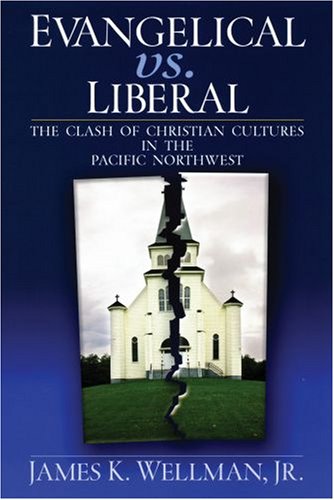
Coffee and Christ: Evangelical V. Liberal in the Pacific Northwest

Paul Harvey

Those of you who know Matt Sutton may think he deserves his own separate listing on the "America Repent" sign in the post below this one. That being said, the man writes fun and outstanding books, articles, and reviews. In the latter category is his piece today "Evangelical V. Liberal: A Report from the Pacific Northwest," reviewing a new book entitled Evangelical vs. Liberal: The Clash of Christian Cultures in the Pacific Northwest. Most reports on the regional variations in American religious expression emphasize the Pacific Northwest as an outlier in terms of relative religious indifference. Evidently, that is changing, at least in certain sectors of the region. And, unlike the evangelicals that I grew up with, these Christian Reformed Church folks don't have any problem with gustatory sybaritic pleasures, including French cuisine and cigar lounges (bringing to mind a conversation with Peggy Bendroth years ago, where she reminisced on growing up with cigar-smoking Dutch Calvinists puffing away all around her).

He concludes:

Evangelical vs. Liberal is a balanced and engaging exploration of religious difference in the most unchurched region of the country. Perhaps the most interesting aspect of this study was Wellman's reflection on how his research had influenced him as a Presbyterian minister and professor of religion. "I began by sharing some of the biases of liberals toward evangelicals," he writes. "But through my research I have come not to agree with evangelicals but to respect the power of their convictions and the perseverance by which they serve one another, their communities, and their world. Evangelicals, in this study, put their feet and their resources where their mouth is." This is not to say that liberals don't. However, evangelicals have a far clearer sense of community and mission. And in Moscow, Idaho, they also serve good coffee and know how to make really tasty French food. For all of these reasons, evangelicals are winning the clash of Christian civilizations, not just across the nation, but even in the Pacific Northwest.

Senin, 15 November 2010

Southern Cultures Announcement and CFP

Paul Harvey

The following announcement from the journal Southern Cultures will be of interest to some of you here:

Southern Cultures, the award-winning quarterly from UNC's Center for the Study of the American South, has added several more essays and features to the section of our website that focuses of American religion, including content from our brand new issue. We'd also like to remind scholars of religion in the South--and related topics--that we're interested in your
submissions.

Over 58,000 readers in classrooms in over 60 countries have viewed our content online. To read our material on religion, please visit here. You'll also find our submission guidelines, content on other subject areas, and more information about our latest issue here.

I would just add that cruising through the journal's most popular articles and pieces from the last decade yields a lot of fun reading, including Michael Butler's "Sin, Salvation, and Southern Rock."
Related Posts Plugin for WordPress, Blogger...